Carpet Cleaning Tampa: The Complete Guide for Humid Florida Homes
Living in Tampa Bay means enjoying sunshine and sea breezes — but it also means battling one of the most carpet-unfriendly climates in the country. Carpet cleaning in Tampa requires a different approach than in drier regions because our year-round humidity, heavy summer rains, and subtropical heat create the perfect conditions for mold, mildew, and allergen buildup deep inside carpet fibers. Whether you’re in South Tampa, Brandon, or St. Petersburg, your carpets are working overtime to stay fresh.
This guide breaks down everything Tampa homeowners need to know about maintaining clean, healthy carpets — from choosing the right cleaning method to tackling Florida-specific challenges like post-hurricane moisture and pollen season. We’ll cover upholstery care too, since your sofas and chairs face the same humid environment every single day. Read on to protect your investment and keep your home’s air quality at its best.
Why Tampa’s Humidity Makes Carpet Cleaning More Critical
Florida’s average relative humidity hovers between 70% and 90% for much of the year, and Tampa is no exception. That persistent moisture doesn’t just linger in the air — it settles into carpet padding, upholstery foam, and fabric fibers where it feeds mold spores and dust mites. According to the EPA, dust mite populations thrive when indoor humidity exceeds 50%, and Tampa homes can easily hit that threshold even with the AC running.
Beyond dust mites, high humidity accelerates the breakdown of carpet backing adhesives, causes fibers to mat faster, and traps pet dander and pollen with remarkable efficiency. Tampa’s oak and pine pollen seasons — which can run from January through May — dump enormous amounts of fine particles onto lanai screen porches that then get tracked inside on shoes and pet paws. The result is a compounding cycle: humidity keeps fibers swollen and sticky, and sticky fibers capture more contaminants.
Understanding this cycle is the first step toward breaking it. A consistent regular cleaning routine in Tampa helps interrupt allergen buildup before it becomes a deep-seated problem. Scheduling professional extractions at least twice a year — rather than the national average recommendation of once — is simply the smarter standard for our climate.
Best Carpet Cleaning Methods for Tampa Homes
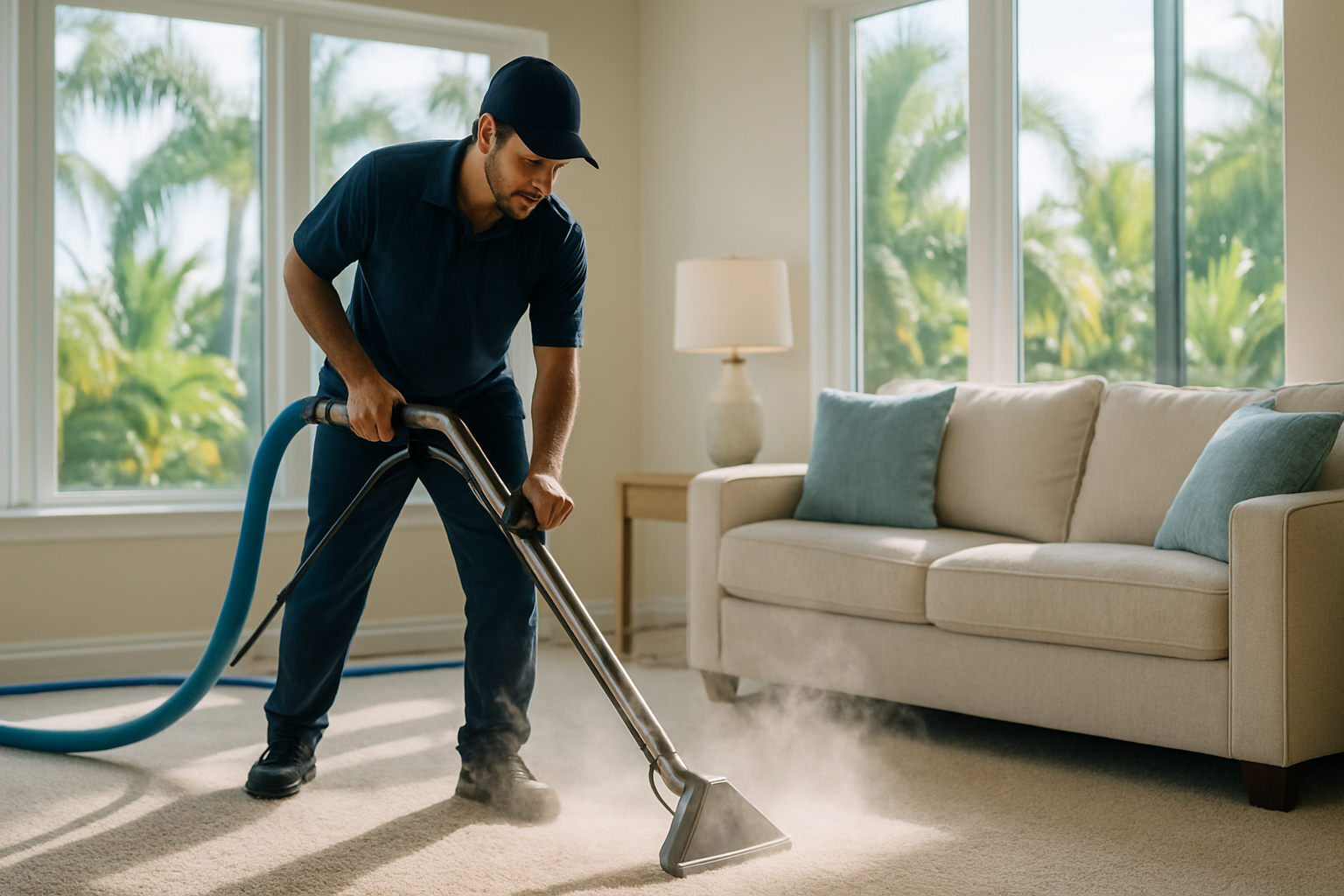
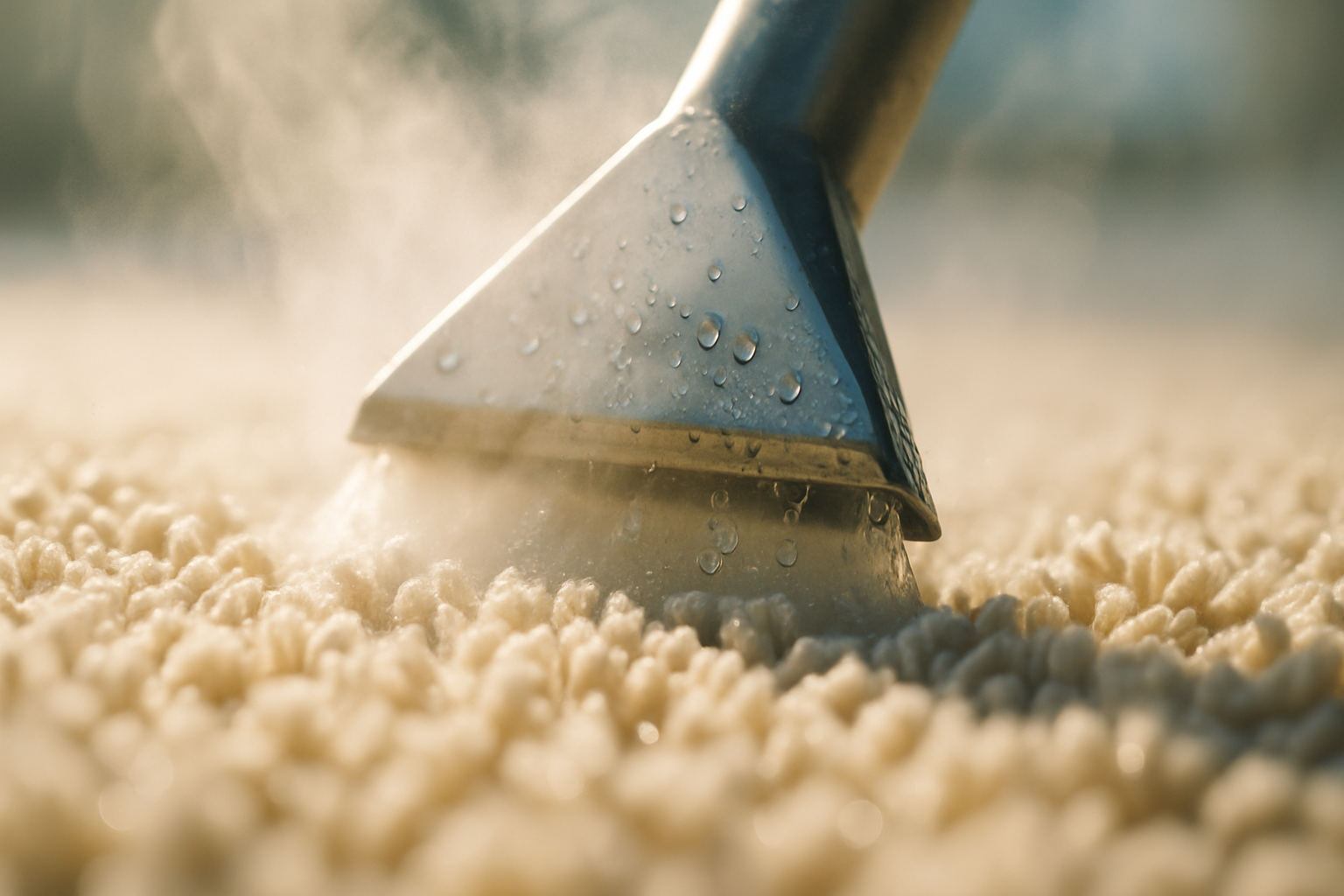
Not all carpet cleaning methods are equally suited to Tampa’s environment. Hot water extraction (often called steam cleaning) remains the gold standard for deeply soiled carpets because the high-temperature water kills mold spores and bacteria while the powerful vacuum removes them along with dirt and detergent residue. For Tampa homes that have experienced any flooding or roof leaks — common after hurricane season — hot water extraction followed by rapid drying is the recommended protocol.
Hot Water Extraction vs. Dry Compound Cleaning
- Hot water extraction: Best for heavily soiled carpets, allergen removal, and post-storm recovery. Requires thorough drying (4–6 hours) to prevent re-moisturizing in humid conditions.
- Dry compound cleaning: Uses minimal moisture and is ideal for high-traffic areas that cannot be taken out of service for long. Less effective on deep stains.
- Encapsulation: A low-moisture method good for commercial-style maintenance between deep cleans.
For most Tampa Bay households, hot water extraction paired with industrial air movers and dehumidifiers delivers the best long-term results. Make sure any professional service you hire uses truck-mounted equipment, which generates higher water temperatures and stronger suction than portable units. Check out our deep cleaning services in Tampa to see exactly what our process includes.
Upholstery Care in the Florida Climate
Your sofa, armchairs, and dining chairs are every bit as vulnerable to Tampa’s humidity as your carpets — yet upholstery often goes uncleaned for years. Fabric sofas absorb body oils, pet fur, and airborne mold spores at a faster rate in humid conditions, and the dense padding inside cushions can harbor moisture for weeks after a spill or a particularly rainy stretch.
Upholstery Cleaning Tips for Tampa Homeowners
- Check fabric codes: Look for the W (water-safe), S (solvent only), or WS (both) tag under your cushions before treating any stain.
- Act fast on spills: In high humidity, spills wick deeper and faster. Blot immediately with a clean white cloth — never rub.
- Ventilate after cleaning: Open windows or run ceiling fans to accelerate drying. In Tampa’s summer months, a portable dehumidifier speeds the process significantly.
- Schedule professional cleaning annually: Upholstery fabrics in St. Petersburg and Tampa homes should be professionally hot-water extracted or dry-cleaned at least once a year.
Outdoor furniture cushions on lanais and screen porches deserve special attention too. Tampa’s screen enclosures trap humidity while still exposing fabrics to UV degradation and pollen. Use outdoor-rated fabric cleaner and allow cushions to dry completely in sunlight before replacing covers.

Carpet Cleaning Tips for Tampa’s Hurricane and Rainy Season
From June through November, Tampa Bay residents live with the reality of tropical storms, flash flooding, and near-daily afternoon downpours. Water intrusion — even minor seepage under a door or a slow roof drip — can saturate carpet padding within hours. Wet padding is the single fastest route to mold growth in a Florida home, and mold can begin colonizing damp material in as little as 24 to 48 hours in our climate.
Post-Storm Carpet Action Plan
- Extract standing water immediately using a wet/dry vacuum or professional water extraction equipment.
- Pull back carpet edges to inspect and dry the padding — in most cases of flooding, the padding must be replaced entirely.
- Run dehumidifiers and fans continuously until moisture readings drop below 12% (use a moisture meter, available at most hardware stores).
- Apply an EPA-registered antimicrobial treatment after drying to prevent mold regrowth.
Don’t wait for visible mold or odor before calling a professional. By the time you smell mildew in Tampa, mold has typically been growing for days. Early intervention is always less costly — and far healthier — than remediation after the fact.
Maintaining Carpets Between Professional Cleanings
Professional cleaning is essential, but what you do in between appointments determines how quickly your carpets decline. In Tampa’s climate, a few consistent habits make a significant difference in extending the life of your flooring and upholstery.
Daily and Weekly Maintenance Habits
- Vacuum twice a week minimum: Use a HEPA-filter vacuum to capture fine pollen and allergen particles rather than recirculating them into the air.
- Use entry mats: Place thick, washable mats at every exterior door — especially lanai entries — to trap dirt, moisture, and pollen before they reach carpet.
- Keep indoor humidity below 55%: A whole-home dehumidifier or properly sized HVAC system is your best long-term carpet protection tool in Tampa Bay.
- Rotate furniture: Shift furniture positions every six months to prevent permanent fiber compression in high-traffic zones.
- Address spills within minutes: The longer a spill sits in humid conditions, the deeper it penetrates and the harder it becomes to lift fully.
Small daily actions compound over time. Combining these habits with professional deep cleaning on a Tampa-appropriate schedule keeps fibers resilient, colors vibrant, and indoor air quality high year-round.
Frequently Asked Questions
How often should I schedule carpet cleaning in Tampa compared to other cities?
Because of Tampa’s high humidity and long pollen seasons, most flooring professionals recommend professional carpet cleaning in Tampa every four to six months — roughly twice as often as the standard annual suggestion for drier climates. Homes with pets, young children, or allergy sufferers should lean toward the four-month end of that range.
Can I use a rental steam cleaner instead of hiring a professional in Tampa?
Rental units can handle light refreshing, but they lack the water temperature and suction power of truck-mounted professional equipment, and they leave significantly more residual moisture in the carpet. In Tampa’s humidity, excess moisture left behind by an underpowered machine can actually worsen mold and mildew risk rather than improve it.
How do I prevent mold in carpets after heavy Tampa rainstorms?
Speed is everything — extract water and begin drying within the first hour if possible. Run dehumidifiers and fans immediately, inspect the padding for saturation, and apply an antimicrobial treatment once the carpet is dry. If water has covered more than a small area, calling a professional water extraction service is the safest course of action.
Is it safe to clean upholstery at the same time as carpets in a Tampa home?
Yes, and it’s actually more efficient to clean both on the same day so you can run fans and dehumidifiers across the whole space simultaneously. Just confirm the drying requirements for each fabric type beforehand, and ensure the room is well-ventilated throughout the drying period — especially important in Tampa’s humid summer months.
Ready to give your carpets and upholstery the deep, climate-smart clean they deserve? FG7 Cleaning’s professional team serves homeowners across Tampa, St. Petersburg, Clearwater, Brandon, and Riverview with proven methods tailored to Florida’s unique environment. Contact us today to book your appointment and experience the FG7 difference.