Beach Home Cleaning Tampa Bay: Keeping Sand Out for Good
Living near the water in Tampa Bay is one of life’s greatest pleasures — weekend trips to Clearwater Beach or St. Pete Beach are practically a way of life. But anyone who has done beach home cleaning in Tampa Bay knows that sand has a sneaky way of hitching a ride indoors, embedding itself in carpets, grout, and furniture long after the fun is over. If you feel like you’re constantly sweeping, you’re not imagining it.
The good news is that with a few smart strategies, you can dramatically reduce the amount of sand that migrates from your flip-flops to your floors. Tampa’s warm, humid climate also means sand stays damp and clings to surfaces longer than in drier regions, which makes prevention even more important. This guide is packed with practical, Florida-tested hacks to help you reclaim your home from the beach — without sacrificing the fun of living so close to it.
1. Build a Sand-Stopping Entry Zone for Your Tampa Bay Home
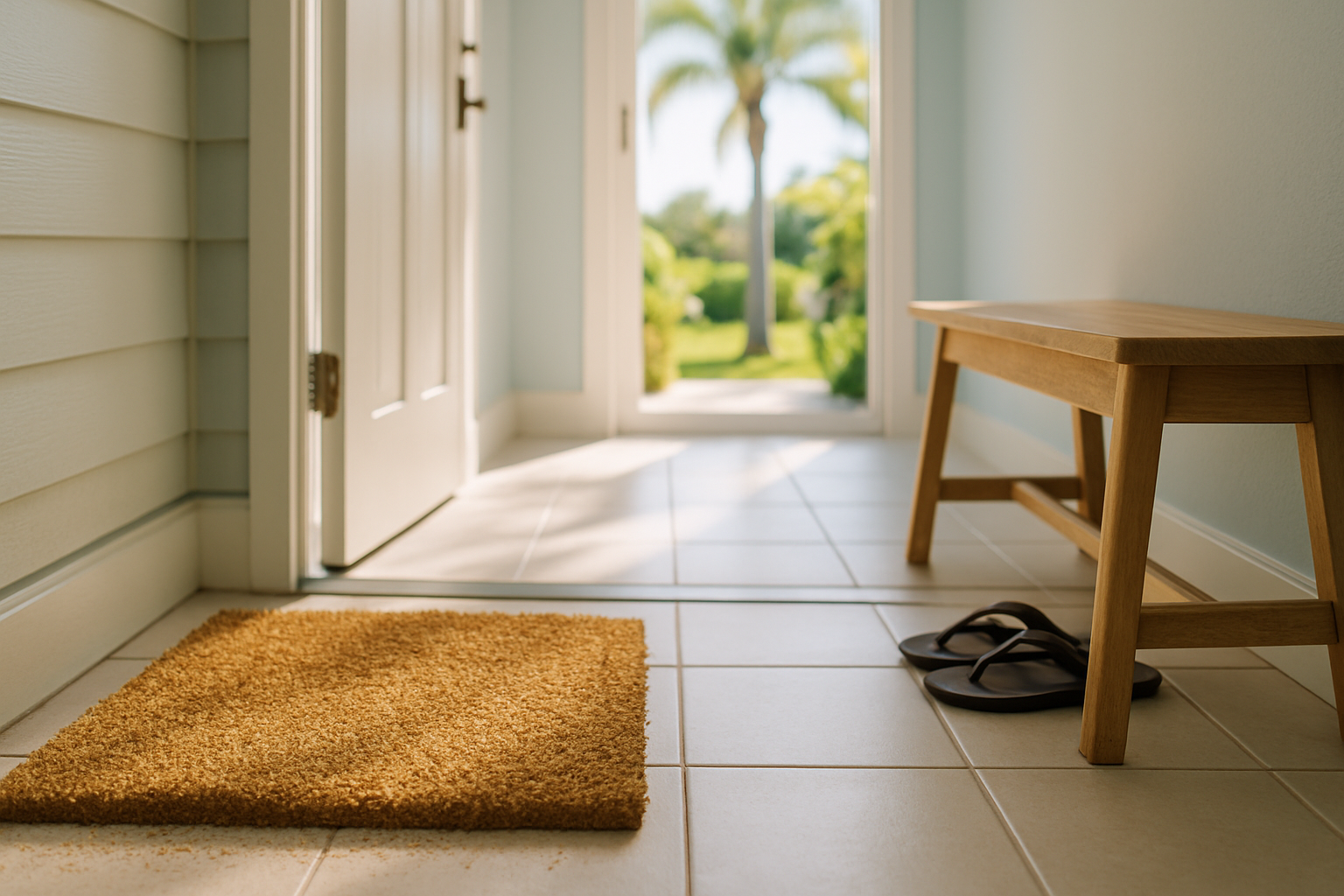
The single most effective weapon in beach home cleaning for Tampa Bay residents is a well-designed entryway that traps sand before it ever touches your interior floors. Start by placing a coarse-bristle outdoor mat directly outside the door — coconut coir mats are exceptional at scraping sand from shoe soles. Follow it with a softer indoor mat just inside the door to catch any remaining grit.
Take it further by installing a small bench or a wall-mounted hook station near the entry so family members and guests have a natural place to sit, remove footwear, and store beach bags. Designate a bin or tray for sandy shoes, flip-flops, and gear so they never travel deeper into the house. If your home has a lanai or screen porch — a staple of Florida living — treat it as a decompression zone: rinse off feet at an outdoor shower or hose station before stepping onto the lanai, then remove shoes before entering the main home. This two-stage approach keeps the majority of sand contained at the perimeter, making your regular cleaning routine far more manageable and efficient.
2. Florida-Smart Floor Care: Tackling Sand on Every Surface
Sand is essentially tiny rock particles, and dragging it across hardwood, tile, or vinyl plank floors is a fast track to micro-scratches. In Tampa and St. Petersburg homes, where tile and luxury vinyl are the most popular flooring choices, this matters a lot. The key rule: always dry-sweep or vacuum before mopping. Wet-mopping over sand grinds particles into grout lines and scratches tile glazing.
Best Vacuuming Practices for Sandy Floors
- Use a vacuum with a hard-floor setting that lifts the brush roll to avoid scattering sand.
- Vacuum high-traffic entry paths daily after beach days, not just weekly.
- For area rugs, take them outside and shake vigorously before vacuuming — Tampa’s year-round warmth makes this easy even in January.
Dealing With Sand in Grout Lines
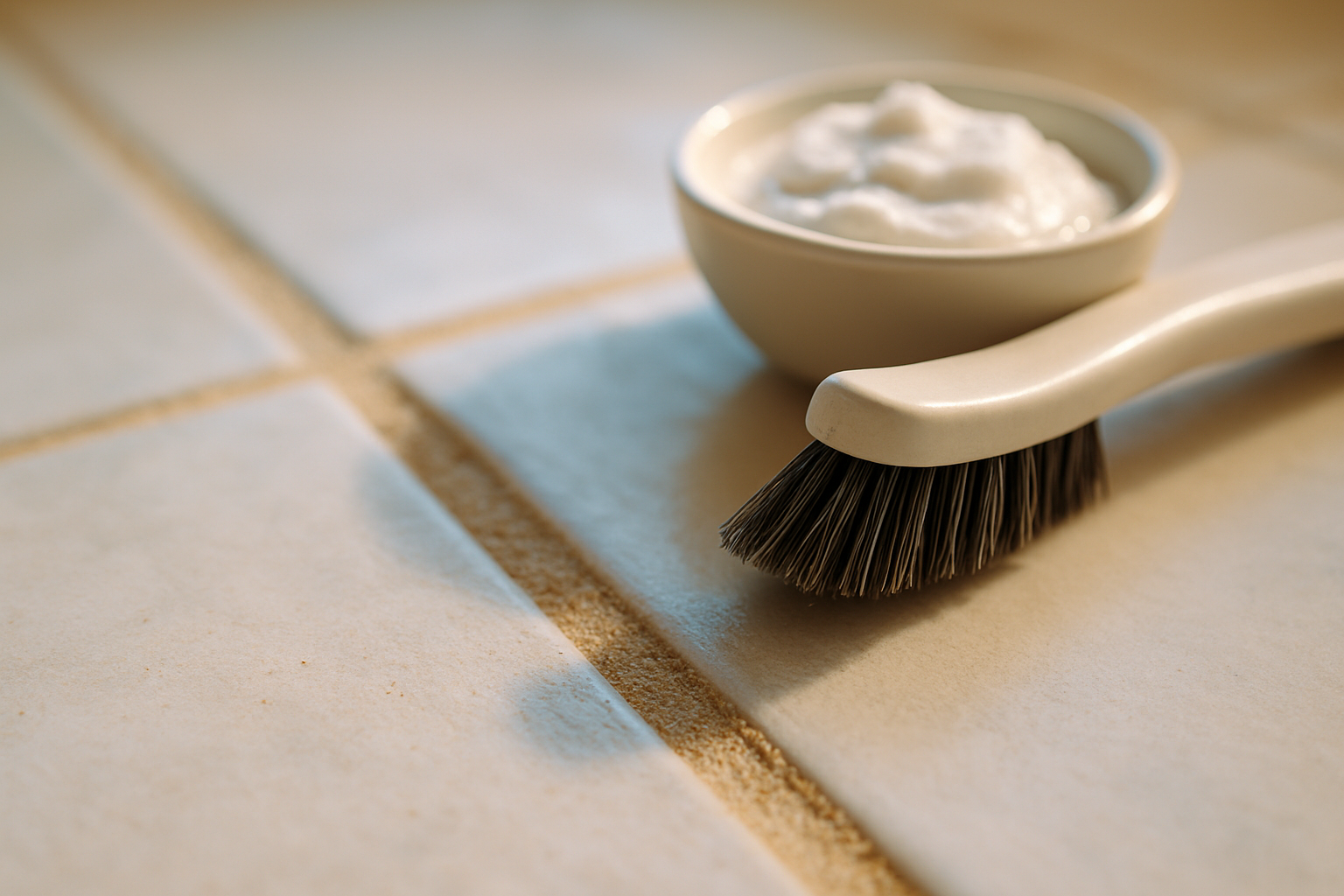
Sand-filled grout is one of the most common complaints in Tampa Bay coastal homes. A stiff-bristled grout brush with a baking soda paste will dislodge embedded particles effectively. For a thorough reset, consider scheduling a professional deep cleaning in Tampa once or twice a year to restore grout lines and high-traffic surfaces to like-new condition.
On carpet, sprinkle a generous layer of dry baking soda, let it sit for 15 minutes to absorb moisture that makes sand stick, then vacuum slowly in multiple directions. This loosens deeply embedded grains that a single pass won’t capture.
3. Upholstery, Bedding, and the Hidden Sandy Spots You’re Missing
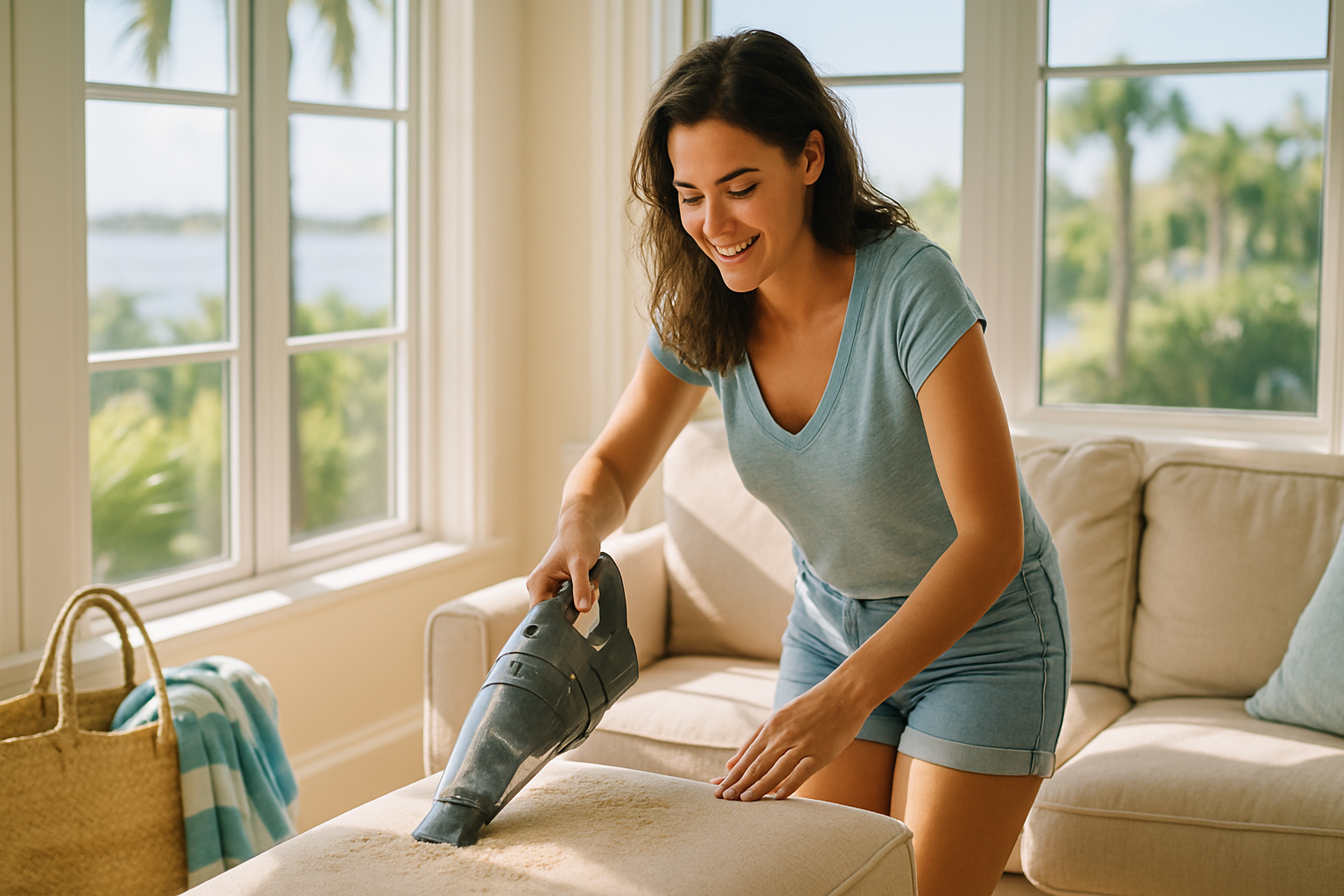
Sand doesn’t stop at the floor. Tampa Bay beachgoers frequently overlook upholstered furniture, throw pillows, and bedding — especially when kids or pets jump onto sofas after a beach day. A handheld vacuum or upholstery attachment is your best friend here. Run it along seat cushion seams, behind throw pillows, and under couch cushions at least weekly during peak beach season, which in Tampa essentially runs from March through October.
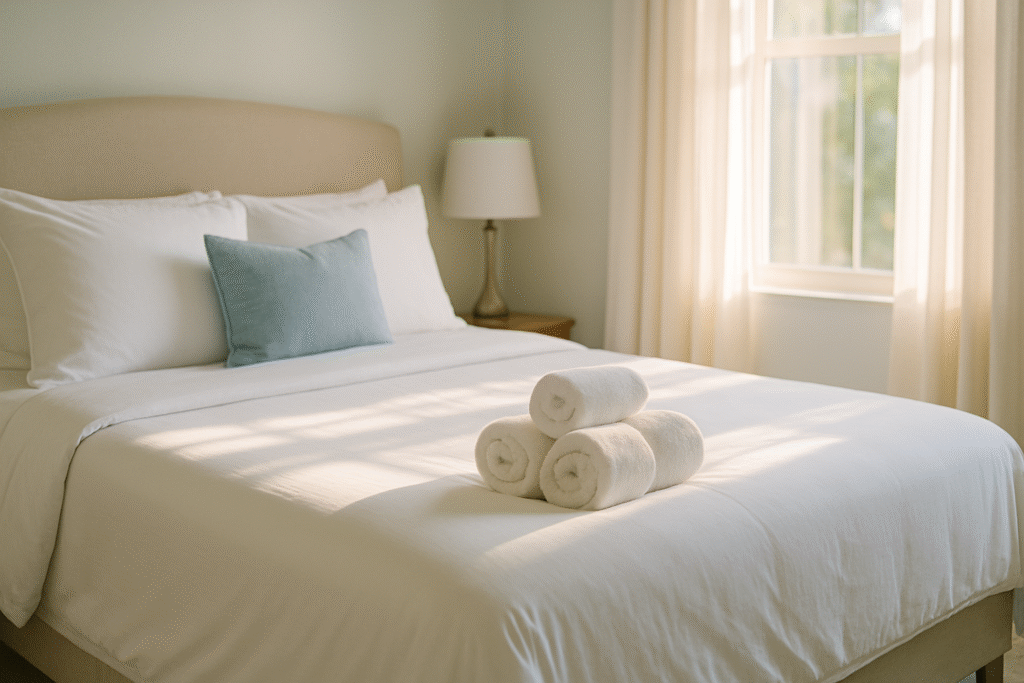
Wash throw pillow covers and beach towels promptly after each trip — don’t let them pile up and distribute sand throughout the laundry room. For mattresses in beach-adjacent bedrooms, a washable mattress protector makes a significant difference. When it’s time to launder, shake sandy textiles outdoors first to remove loose sand before loading the washer, which protects your machine’s drum and drain pump. Window sills, ceiling fan blades, and screen porch furniture are also notorious sand-collection points in Florida homes. Wipe these surfaces weekly with a damp microfiber cloth to prevent buildup. If maintaining all these surfaces feels overwhelming, a recurring regular cleaning plan in Tampa can keep everything consistently fresh between your deeper sessions.
4. Beach Home Cleaning Tampa Bay: Managing Humidity and Sand Together
One challenge unique to Tampa Bay beach home cleaning is that Florida’s notorious humidity causes sand to retain moisture, making it stickier and harder to remove than the dry desert sand many cleaning guides describe. Relative humidity in the Tampa Bay area regularly tops 80% from June through September, which is also prime beach season. That damp sand clings to floors, walls, and fabric with surprising tenacity.
Humidity-Fighting Strategies
- Run a dehumidifier or ensure your HVAC system is set to manage indoor humidity between 45–55% — this dries out residual sand faster and inhibits mold growth in grout.
- After beach days, open windows (with screens intact) in the late evening when Tampa Bay breezes drop the outside humidity.
- Use moisture-absorbing doormats that dry quickly — avoid thick shag-style mats that stay damp and become sand magnets.
Hurricane season (June–November) also blows fine sand and debris against exterior windows and screens. After any named storm or significant rain event, inspect and clean your window tracks and screen porch screens promptly, as accumulated wet sand can corrode aluminum frames over time. A diluted white vinegar solution cleans sandy window tracks effectively without harsh chemicals.
5. Quick-Clean Routines That Actually Work for Florida Beach Homes
Consistency beats intensity when it comes to beach home maintenance in Tampa, St. Petersburg, Clearwater, Brandon, and Riverview. A five-minute daily sweep of high-traffic zones after beach outings prevents the weekend sand buildup that turns into a two-hour cleaning marathon. Keep a small handheld vacuum and a microfiber dust mop near your entry zone for fast, low-effort touch-ups.
A Simple Weekly Beach-Home Checklist
- Shake and vacuum all entry mats.
- Dry-sweep, then damp-mop hard floors.
- Vacuum upholstery and shake throw pillows outdoors.
- Wipe down lanai furniture and clean screen porch door tracks.
- Wash all beach towels and sandy textiles.
- Wipe window sills and ceiling fan blades.
Batch your deeper tasks — grout scrubbing, washing mattress protectors, cleaning window screens — on a monthly basis. Building this rhythm means your home stays guest-ready year-round and the cumulative grit never reaches the point of frustration. Small, regular actions are the heart of sustainable beach home cleaning in the Tampa Bay lifestyle.
Frequently Asked Questions
What is the best way to start beach home cleaning in Tampa Bay?
The best starting point for beach home cleaning in Tampa Bay is building a dedicated entry zone with layered mats, a shoe-removal station, and outdoor rinsing to intercept sand at the door. Tackling the source prevents sand from spreading throughout the home. Once the entry is optimized, focus on daily dry-sweeping of high-traffic floors.
How often should Tampa Bay homeowners deep-clean their floors during beach season?
During peak beach season — roughly March through October in Tampa — a light daily sweep and weekly thorough vacuum-then-mop routine is ideal. A professional deep clean every three to six months tackles embedded sand in grout and hard-to-reach corners that regular cleaning misses. This schedule keeps floors looking their best and prevents long-term surface damage.
Does Florida humidity make sand harder to clean indoors?
Yes — Tampa Bay’s high humidity causes sand particles to absorb moisture and stick to surfaces more aggressively than dry sand. Keeping indoor humidity between 45–55% with your HVAC or a dehumidifier accelerates drying and makes vacuuming more effective. Always dry-sweep or vacuum before any wet mopping to avoid turning damp sand into a grinding paste.
How do I keep my lanai and screen porch sand-free in St. Petersburg or Clearwater?
Treat your lanai as the final checkpoint before entering the main home — use it as a rinse-and-remove-shoes station. Sweep or blow out the screen porch floor weekly and wipe down furniture with a damp cloth to prevent sand-dust accumulation. After storms during hurricane season, clean screen frames and door tracks promptly to prevent corrosion from wet sand buildup.
Ready to let someone else handle the scrubbing? The team at FG7 Cleaning specializes in keeping Tampa Bay homes spotless — sand, humidity, and Florida life included. Contact us today to schedule your cleaning and enjoy your next beach day without the cleanup dread.