Allergy-Proofing Your Tampa Home: A Cleaning Strategy for Allergy Cleaning Tampa
Tampa Bay consistently ranks among the worst cities in the United States for allergy sufferers — a sobering distinction backed by the Asthma and Allergy Foundation of America. If you’re sneezing through spring or struggling to breathe on a humid August afternoon, your home may be making things worse. Implementing a targeted allergy cleaning Tampa strategy is one of the most effective steps you can take to reduce indoor allergens and protect your family’s health.
Florida’s subtropical climate creates a near-perfect breeding ground for dust mites, mold spores, and pollen. High humidity, warm temperatures year-round, and the seasonal invasion of oak and grass pollen mean allergens never truly disappear in Tampa. The good news is that with the right cleaning routines and tools, you can dramatically lower allergen levels inside your home and breathe easier every single day.
Understanding Tampa’s Unique Allergen Landscape
Before you can fight allergens effectively, you need to know what you’re up against. In Tampa and the broader Tampa Bay area, the primary indoor allergens include dust mites, cockroach droppings, pet dander, mold spores, and outdoor pollen that hitchhikes inside on shoes and clothing. Tampa’s humidity regularly sits above 70%, which is well above the 50% threshold that dust mites and mold thrive in.
Oak pollen season typically peaks in February and March, followed by grass pollen in summer — meaning there’s rarely a true “off-season” for allergy sufferers here. Hurricane season (June through November) brings heavy rains that spike outdoor mold counts, and those spores easily infiltrate your home through open windows, HVAC systems, and gaps around doors. St. Petersburg and Clearwater residents face similar challenges due to the coastal moisture that keeps relative humidity elevated even on sunny days.
- Dust mites: Thrive in bedding, upholstery, and carpet in humid conditions
- Mold spores: Spike after rain events and in bathrooms or poorly ventilated rooms
- Pollen: Oak, cedar, and grass pollen infiltrate homes year-round in Tampa
- Pet dander: Clings to soft surfaces and circulates through HVAC ducts
- Cockroach debris: A leading asthma trigger in Florida urban areas
Allergy Cleaning Tampa: The Power of HEPA Vacuuming
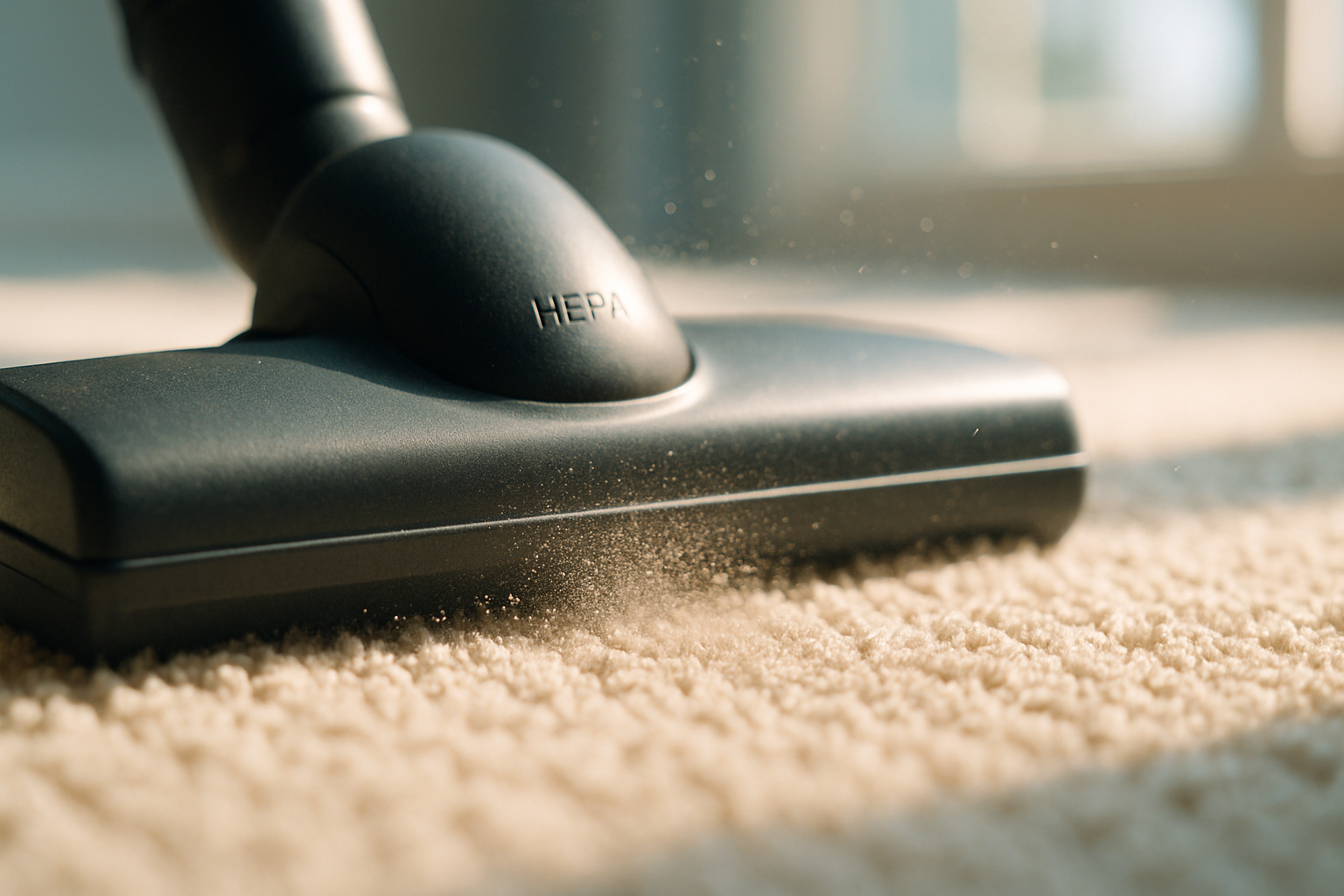
Standard vacuum cleaners can actually worsen allergies by exhausting fine particles back into the air. A HEPA (High-Efficiency Particulate Air) vacuum, by contrast, captures 99.97% of particles as small as 0.3 microns — small enough to trap dust mite feces, mold spores, and pet dander. For any serious allergy cleaning Tampa routine, a HEPA vacuum is non-negotiable.
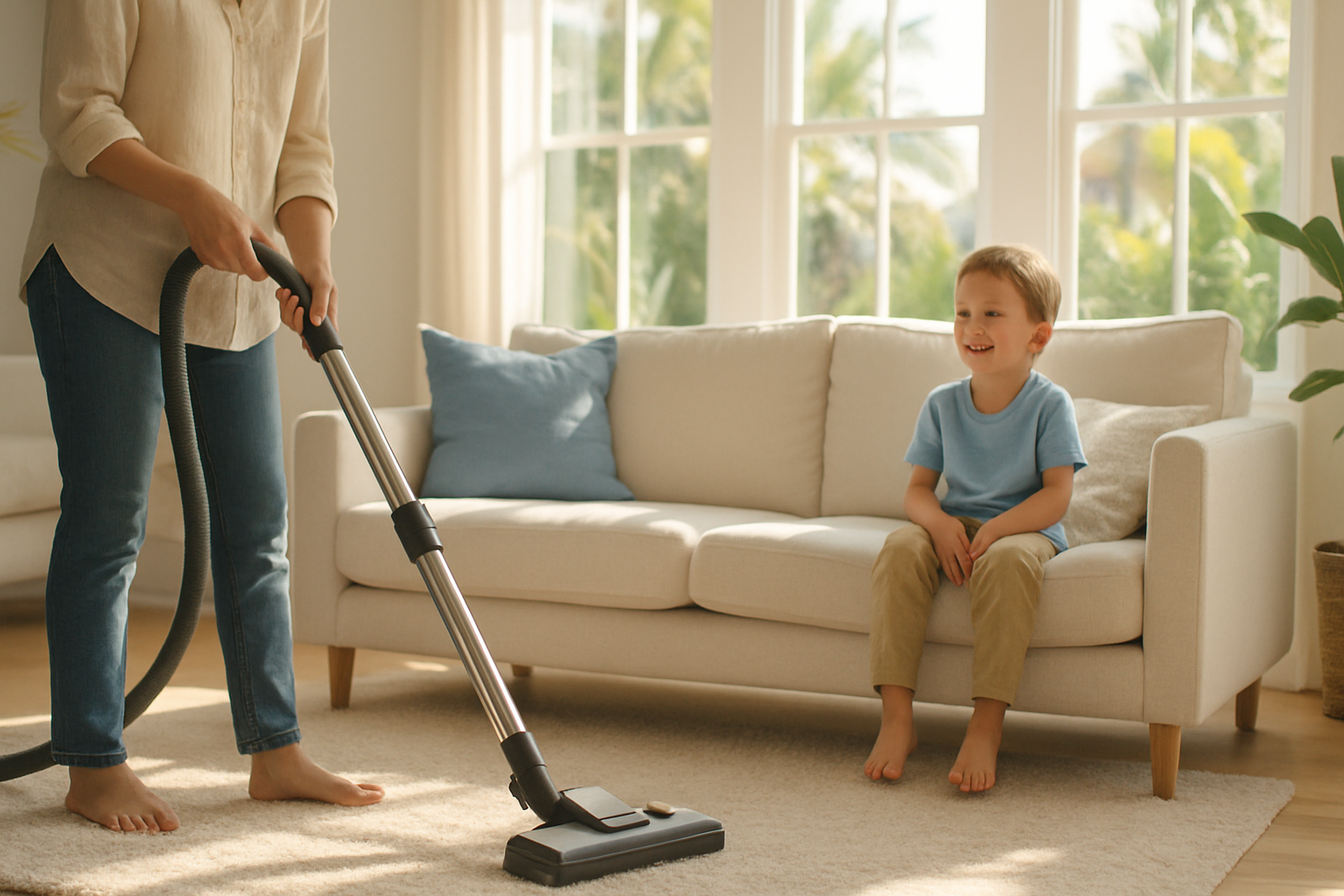
Vacuum every soft surface in your home at least twice a week, including carpets, area rugs, upholstered furniture, and even mattresses. Pay close attention to baseboards and ceiling fan blades, which accumulate settled dust that redistributes with every breeze. In Tampa homes with lanais or screened-in porches, vacuum the screen mesh and surrounding flooring regularly — pollen and mold spores collect there in significant quantities.
Pro HEPA Vacuuming Tips
- Use slow, overlapping strokes — rushing misses embedded particles
- Change or empty the canister outdoors to avoid re-releasing allergens indoors
- Replace HEPA filters every 6–12 months depending on use
- Vacuum in the morning so any disturbed particles settle before bedtime
For a thorough allergen reset, consider scheduling a professional deep cleaning in Tampa to tackle embedded allergens in hard-to-reach areas before establishing your weekly routine.
Humidity Control and Mold Prevention
Controlling indoor humidity is arguably the single most impactful thing Tampa homeowners can do to reduce allergens. Keep indoor relative humidity between 40% and 50% using a dehumidifier or a properly sized and maintained central air conditioning system. Run bathroom exhaust fans for at least 20 minutes after every shower, and fix any plumbing leaks immediately — mold can begin colonizing a damp surface within 24 to 48 hours.
Focus mold-prevention cleaning on high-risk zones: bathrooms, kitchen sink areas, window sills, and the walls adjacent to exterior doors. A weekly wipe-down with a diluted white vinegar solution (1 cup vinegar per 1 cup water) is effective on non-porous surfaces. During Tampa’s rainy season, inspect your window tracks and door frames after heavy storms — standing water in these areas invites rapid mold growth.
Room-by-Room Humidity Checklist
- Bedrooms: Use a hygrometer to monitor humidity; target under 50%
- Bathrooms: Run exhaust fans; squeegee shower walls after each use
- Laundry room: Vent dryer outside; never leave wet clothes sitting
- Lanai/screen porch: Allow airflow; clean debris that traps moisture
Bedding, Soft Furnishings, and Allergen Barriers
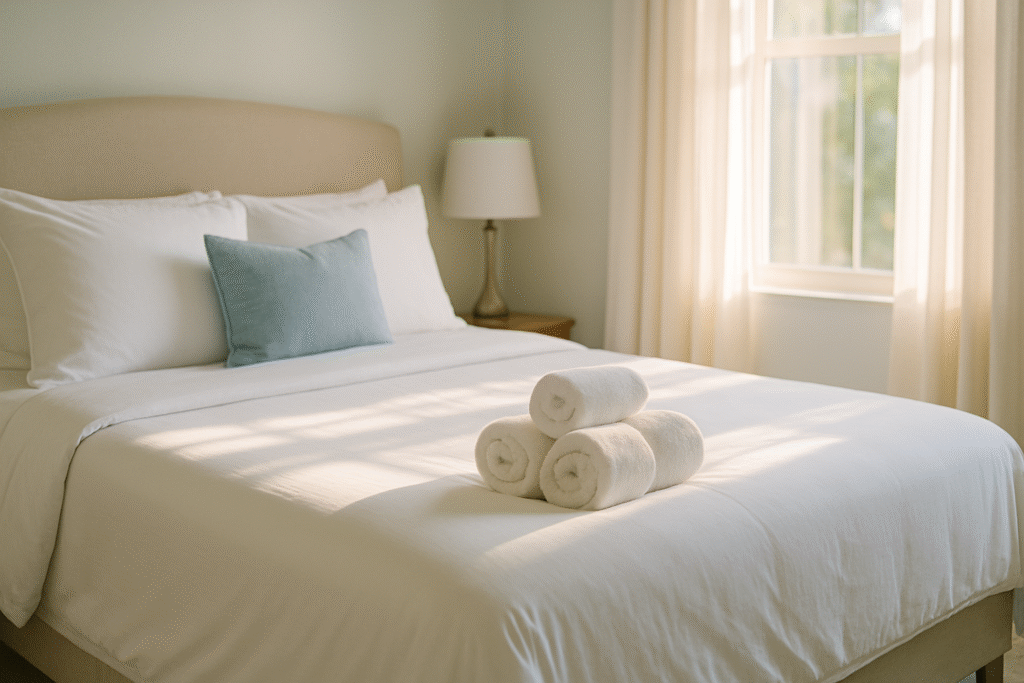
The bedroom is ground zero for dust mite exposure — most people spend six to eight hours a night inhaling whatever lives in their mattress and pillows. In humid Tampa Bay, dust mite populations in untreated bedding can be especially dense. Encase your mattress, box spring, and pillows in allergen-proof, zippered microfiber covers. These covers create a physical barrier that prevents mites from reaching you while you sleep.
Wash all bedding — sheets, pillowcases, and duvet covers — weekly in hot water (at least 130°F) to kill dust mites. If you have young children, launder stuffed animals monthly using the same hot-water method, or seal them in a plastic bag and freeze them for 24 hours, which also kills mites. For upholstered furniture, choose leather or tightly woven synthetic fabrics over chenille or velvet, which trap allergens more readily. Steam cleaning couches and armchairs every two to three months is also highly effective in Tampa’s climate.
Maintaining a consistent regular cleaning schedule in Tampa ensures these soft surfaces never become a reservoir of accumulated allergens between deeper treatments.

HVAC Maintenance and Air Quality: Your Invisible Defense
Your central air conditioning system is both your greatest ally and a potential liability in the fight against indoor allergens. In Tampa, AC units run almost year-round, which means filters accumulate pollen, mold spores, and pet dander at an accelerated rate. Replace your HVAC filter every 30 to 60 days (not the standard 90-day recommendation) and choose a filter rated MERV 11 or higher for meaningful allergen capture.
Schedule a professional duct cleaning every three to five years — or sooner if you notice visible mold growth around vents, musty odors when the system runs, or a recent pest infestation. Keep the area around indoor air handler units clear and dry, and consider adding a whole-home UV air purifier or a standalone HEPA air purifier in bedrooms for an extra layer of filtration. Keeping windows closed during high pollen count days (check airnow.gov for Tampa Bay readings) and relying on your AC for ventilation is a simple but powerful habit during allergy season.
- Change HVAC filters every 30–60 days with MERV 11+ filters
- Clean air vents and grilles monthly with a damp microfiber cloth
- Keep AC drain lines clear to prevent standing water and mold in the unit
- Use a HEPA air purifier in bedrooms, especially for children and seniors
Frequently Asked Questions
What does allergy cleaning Tampa involve compared to a standard house cleaning?
Allergy cleaning Tampa goes beyond surface tidying to specifically target the sources and reservoirs of indoor allergens — dust mites, mold spores, pet dander, and pollen. It typically includes HEPA vacuuming, microfiber dusting, humidity management, and allergen-barrier products that a standard clean may not address. The goal is measurably reducing airborne and surface-level allergens rather than simply making the home look clean.
How often should I professionally clean my home if I have allergies in Tampa?
Most allergy sufferers in Tampa Bay benefit from professional cleaning every two weeks, supplemented by targeted vacuuming and dusting in between visits. Tampa’s high humidity and long pollen seasons mean allergens accumulate faster here than in drier climates. A monthly deep clean of high-risk zones like bedrooms, upholstery, and bathrooms is also recommended.
Are there specific cleaning products I should avoid if someone in my home has asthma?
Yes — many conventional cleaning sprays, bleach-based products, and heavily fragranced detergents release volatile organic compounds (VOCs) that can trigger asthma and worsen allergies. Opt for fragrance-free, plant-based cleaners or diluted white vinegar and baking soda solutions for most surfaces. Always ventilate the area well while cleaning, even with “natural” products.
Does cleaning my lanai or screened porch help reduce indoor allergens?
Absolutely. Tampa’s lanais and screen porches act as a transition zone where pollen, mold spores, and insect debris accumulate before being tracked into the main living area. Regularly sweeping, hosing down, and HEPA-vacuuming the lanai floor and screen mesh significantly reduces how much of that allergen load makes it inside your home.
Ready to make your home a true allergen-free haven? The team at FG7 Cleaning specializes in allergy-focused cleaning services across Tampa, St. Petersburg, Clearwater, Brandon, and Riverview. Contact us today to schedule your allergy cleaning and breathe easier starting with your next clean.