
How to Clean Ceiling Fans Without Dust Raining Down on Your Tampa Home
If you live in Tampa Bay, you already know that ceiling fans work overtime. Unlike homes in cooler climates that mothball their fans in October, Tampa homeowners run them nearly 365 days a year to fight the relentless heat and humidity. That constant spinning means blades accumulate a thick, greasy layer of dust faster than almost anywhere else in the country — and knowing how to clean ceiling fans the right way keeps that grime from cascading onto your furniture, floors, and family.
The good news is that cleaning a ceiling fan doesn’t require a ladder trip that ends in a dust avalanche. With the right technique — especially the beloved pillowcase trick — you can capture every bit of debris before it ever leaves the blade. In this guide, we’ll walk you through a step-by-step method tailored to Florida homes, cover the tools you need, and share how often Tampa Bay residents should tackle this chore to keep indoor air fresh and fans spinning efficiently.
Why Ceiling Fans Get So Dirty So Fast in Florida
Florida’s subtropical climate is beautiful, but it creates a perfect storm for ceiling fan buildup. High humidity causes airborne dust particles to cling to fan blades rather than fall harmlessly to the floor. Add in year-round pollen from oak trees, mold spores that thrive in warm, moist air, and the fine debris that wafts in from lanais and screen porches, and you have a recipe for exceptionally grimy fans. Tampa and St. Petersburg homeowners also tend to run their HVAC systems almost continuously, which circulates even more airborne particulates through the home.
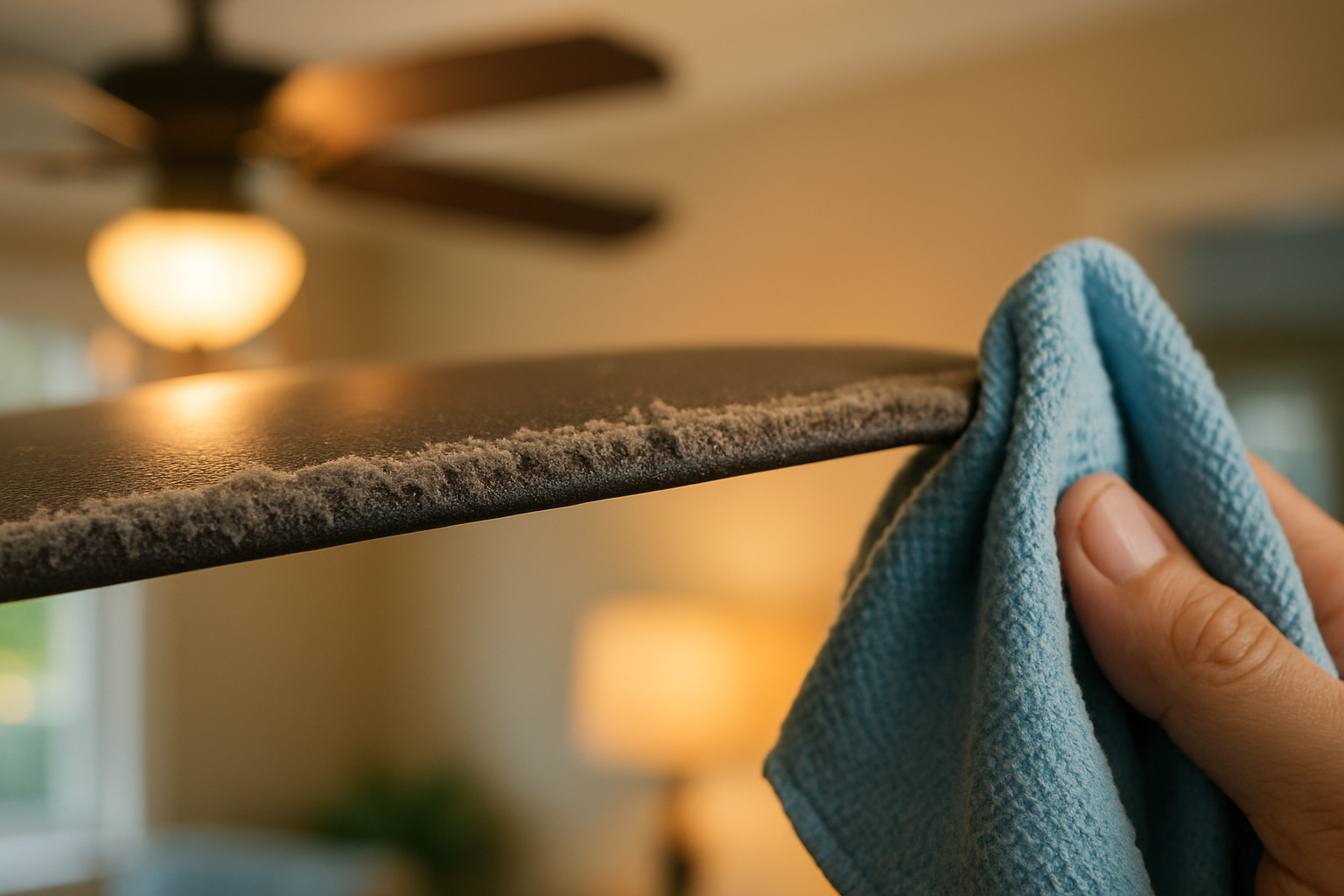
Grease from cooking can migrate into open-plan living areas, coating fan blades with a sticky film that dust bonds to easily. If your home has tile or hardwood floors — very common in the Tampa Bay area — you’ll notice the fallout more than someone with carpet. The result: fans that look clean from the ground but harbor a half-inch ridge of compacted gunk on the trailing edge of every blade. Cleaning them incorrectly just redistributes that mess. Understanding why the buildup happens so quickly is the first step toward tackling it smarter, not harder.
The Pillowcase Method: How to Clean Ceiling Fans Without Making a Mess
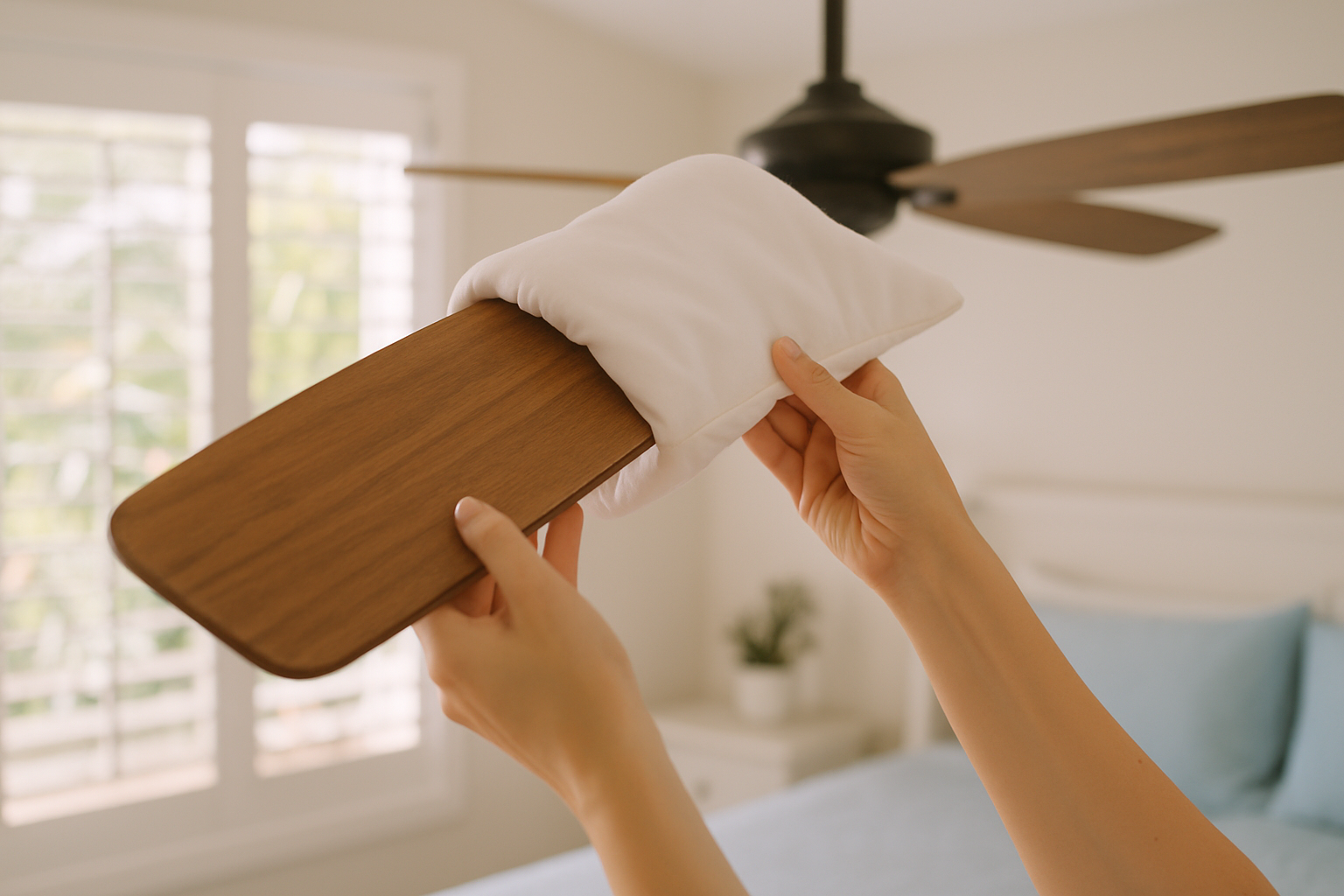
The pillowcase trick is the single most effective technique for how to clean ceiling fans without triggering a dust storm. It works because you encase the blade completely, wiping both the top and bottom surfaces simultaneously while trapping all debris inside the fabric.
What You’ll Need
- An old pillowcase (microfiber works best)
- A step stool or stable ladder
- A few drops of dish soap mixed with warm water in a spray bottle
- A dry microfiber cloth for finishing
- A drop cloth or old sheet on the floor below
Step-by-Step Instructions
- Turn the fan off and wait for blades to stop completely.
- Lay your drop cloth on the floor beneath the fan as a safety net.
- Slide the pillowcase over one blade so it fully surrounds it, then drag it toward you firmly, wiping both surfaces at once. All the dust stays inside the pillowcase.
- Repeat for every blade. Shake the pillowcase into a trash bag or outdoors between blades if heavily soiled.
- Lightly mist each blade with your soapy water solution and wipe dry with a microfiber cloth to remove any greasy residue.
- Wipe the motor housing and light kit with a damp cloth, then dry thoroughly to prevent rust — important in Florida’s humidity.
This method takes about ten minutes per fan and leaves blades genuinely clean rather than just smearing dust around. For a more thorough whole-home refresh, pair this routine with a professional deep cleaning in Tampa to tackle the areas that accumulate grime alongside your fans.
How Often Should Tampa Bay Residents Clean Their Ceiling Fans?
Because Tampa Bay fans run virtually year-round — rather than seasonally — they need more frequent attention than the national average. Most cleaning experts recommend dusting ceiling fan blades every two to four weeks if the fan runs daily, which is standard in Florida homes from spring through fall. During peak pollen season in February through April, when Tampa’s iconic oak trees shed heavily, bumping that frequency to every two weeks helps prevent allergy flare-ups.
A deeper clean — removing blades if possible, washing them with soapy water, and wiping down the motor casing — is appropriate every three months. If you have a lanai or Florida room with a damp-rated fan, check the blade brackets for early signs of rust or mildew monthly; the combination of outdoor air and indoor humidity accelerates corrosion. St. Petersburg homeowners near the bay may also notice salt air contributing to mineral deposits on blade surfaces, which a white-vinegar wipe-down dissolves easily. Pairing your ceiling fan schedule with your regular home cleaning in Tampa appointments makes it easy to stay consistent without adding extra mental load.
Cleaning Ceiling Fans in Special Florida Spaces: Lanais and High-Ceiling Rooms
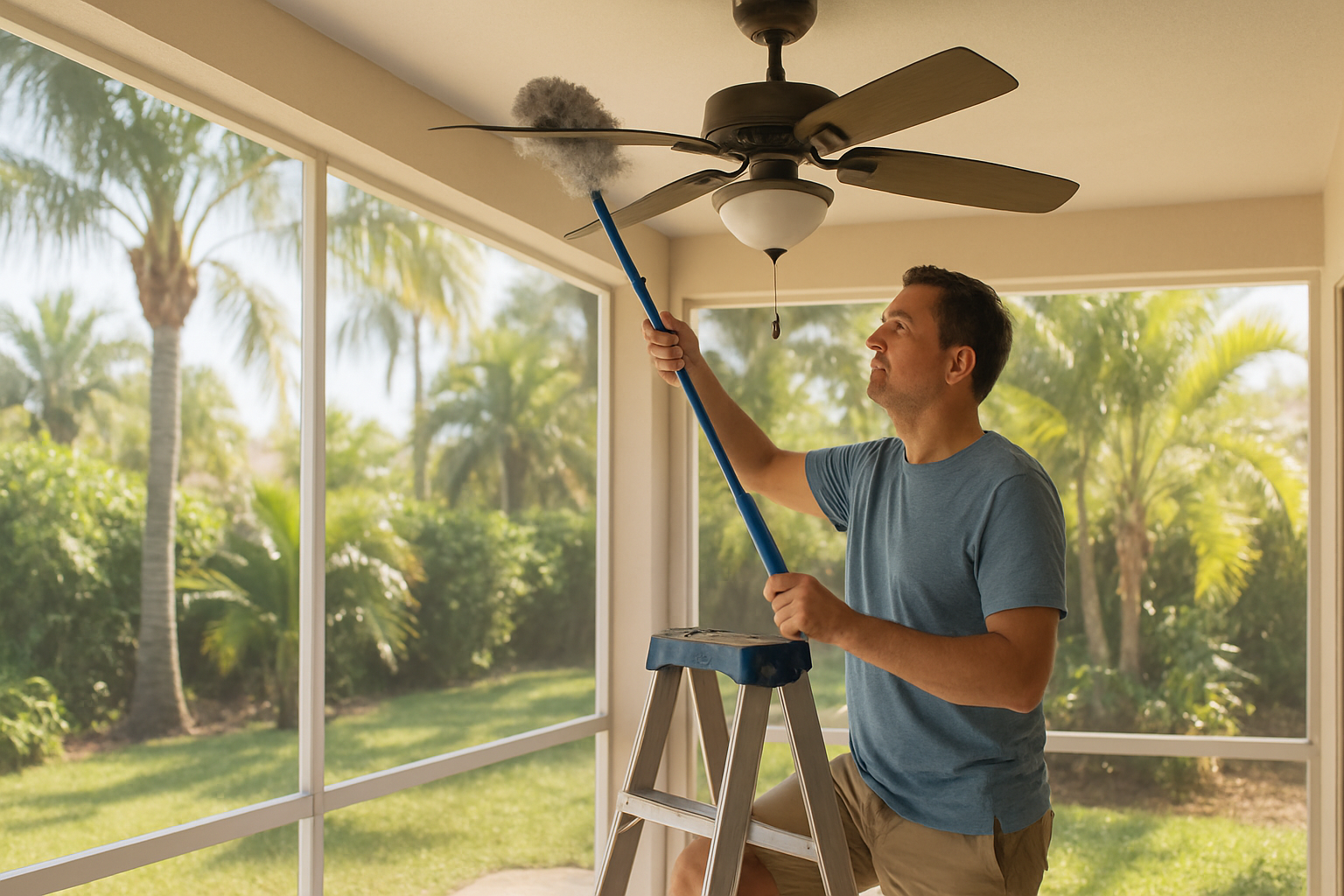
Lanais and screened porches are a defining feature of Tampa Bay living, and many have their own ceiling fans — often damp-rated or wet-rated models built to handle Florida’s outdoor conditions. These fans collect a different mix of debris: pollen, fine soil tracked in from the yard, mildew, and even the occasional spider web. Start by vacuuming blades with a brush attachment before using the pillowcase method, since outdoor fans typically have heavier, drier debris that shakes off more freely.
High-ceiling rooms — common in newer Brandon and Riverview construction — present a different challenge: access. A telescoping fan-blade duster with a microfiber head can reach blades from the ground for routine dusting between deep cleans, reducing how often you need to haul out a tall ladder. For vaulted ceilings above twelve feet, always use a ladder rated for your weight plus tools, and have a second person steady it. Never stand on furniture. After cleaning outdoor-area fans, inspect blade brackets and screws for rust and tighten any that have loosened — Florida’s heat cycles expand and contract metal fittings faster than in cooler states, causing subtle wobble over time that strains the motor.
How to Keep Ceiling Fans Cleaner for Longer
Prevention is just as important as cleaning. A few simple habits can dramatically slow the rate at which Tampa Bay ceiling fan blades collect grime. First, run your HVAC system with a quality MERV-8 or higher filter and replace it every 60 days — Florida’s year-round AC use clogs filters faster than the 90-day national recommendation, and a dirty filter pushes more particulate into the air and onto your fan blades.
Second, consider applying a very thin coat of car wax or furniture polish to clean, dry fan blades. This creates a slick surface that dust struggles to adhere to, making your next cleaning much easier. Third, if you use candles or cook with a lot of oil, run your kitchen exhaust fan diligently — grease aerosols are the primary reason fan blades develop that sticky layer that turns ordinary dust into a cemented crust. Finally, vacuum upholstered furniture and rugs regularly, since those surfaces act as dust reservoirs that your ceiling fan stirs back into the air every time it spins. Small, consistent habits add up to noticeably cleaner blades and better indoor air quality for your whole family.
Frequently Asked Questions
What is the easiest way to learn how to clean ceiling fans without getting dust everywhere?
The pillowcase method is widely considered the easiest and most effective approach — simply slide an old pillowcase over each blade and drag it back toward you, trapping all dust inside the fabric. Pair it with a drop cloth on the floor below as a backup. This technique works especially well in Tampa Bay homes where fans run constantly and accumulate thick, humid-bonded dust.
How often should I clean ceiling fans in my Tampa home?
In Tampa and the surrounding area, plan on dusting blades every two to four weeks since fans operate year-round. During oak pollen season (roughly February through April), increase that to every two weeks. A full deep clean of blades and motor housing is recommended quarterly.
Can I use water to clean ceiling fan blades without damaging them?
Yes, a lightly dampened microfiber cloth with a drop or two of dish soap is safe for most painted or wood-veneer fan blades. The key is to wring the cloth nearly dry — excess moisture can warp blades or cause rust on metal components, a real concern in Florida’s humidity. Dry blades thoroughly before turning the fan back on.
Why does my ceiling fan wobble after cleaning?
Wobble after cleaning usually means a blade bracket screw was inadvertently loosened during the process, or blades were reattached unevenly if you removed them. Check and tighten all bracket screws and use a blade-balancing kit (available at most Tampa Bay hardware stores) if wobble persists. Persistent wobble can strain the motor, so address it promptly.
Ready to leave the hard work to someone else? The team at FG7 Cleaning serves homeowners across Tampa, St. Petersburg, Clearwater, Brandon, and Riverview with thorough, reliable house cleaning services. Contact FG7 Cleaning today to schedule your next cleaning and enjoy a dust-free home without the effort.