How to Clean Grout in Florida Bathrooms: The Mildew Edition
If you live in Tampa Bay, you already know the battle: you scrub your bathroom tile, it looks great for a week, and then the dark grout lines creep back with a vengeance. Learning how to clean grout in a Florida bathroom is a different challenge than anywhere else in the country, because our subtropical humidity creates the perfect breeding ground for mildew, mold, and soap-scum buildup year-round. Tampa’s average relative humidity hovers above 70% for most of the year, meaning your grout never truly gets a break.
This guide is designed specifically for homeowners in Tampa, St. Petersburg, Clearwater, Brandon, and Riverview who are tired of fighting the same losing battle every few weeks. We’ll walk you through safe, effective cleaning products, a step-by-step scrubbing process, long-term sealing strategies, and a maintenance schedule tuned to Florida’s climate — so you can spend less time on your knees with a grout brush and more time enjoying your home.
Why Florida’s Humidity Makes Grout Cleaning Harder
Grout is a porous material, which means it acts like a sponge. In a climate like Tampa’s, where humidity rarely dips below 60% even indoors, that porosity becomes a serious liability. Moisture that lingers after a shower doesn’t evaporate quickly — it seeps into the grout and creates the warm, damp environment that mildew spores love. Unlike mold, which often signals a deeper moisture problem, mildew is a surface fungus that thrives in exactly these conditions and can blacken grout lines surprisingly fast.
Florida’s pollen season also contributes to the problem. Fine airborne particles settle in the textured surface of grout, giving mildew additional organic matter to feed on. Add in the minerals found in Tampa Bay’s hard tap water, and you end up with a stubborn cocktail of mildew stains, mineral deposits, and soap scum all baked into the same grout line. Understanding these local factors is the first step toward choosing the right cleaning strategy — and the right products — for lasting results.
It’s also worth noting that screen porches and lanais — a staple of Florida homes — introduce outdoor humidity directly into adjacent bathrooms, especially if doors are frequently left open during the rainy season. Ventilation matters enormously, and we’ll cover that in the prevention section below.
Safe Products for How to Clean Grout Without Damaging Tile
Before you reach for the strongest chemical cleaner on the shelf, consider what’s underneath your grout. Many Tampa Bay bathrooms feature ceramic, porcelain, or natural stone tile — and each reacts differently to harsh chemicals. The wrong product can etch marble, discolor colored grout, or weaken the grout’s structure over time.
Recommended Cleaning Agents
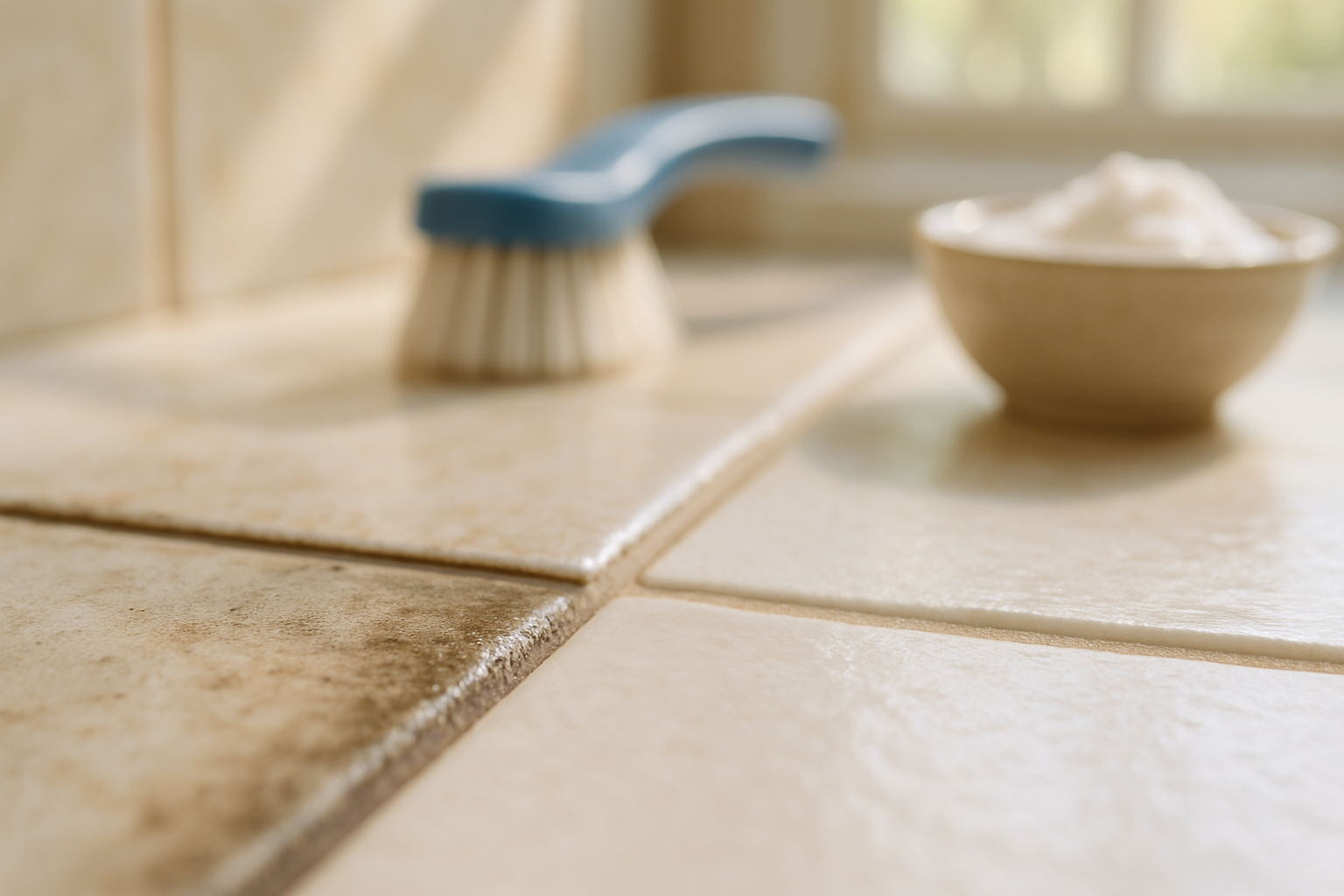
- Oxygen bleach (sodium percarbonate): Gentler than chlorine bleach, highly effective against mildew, and safe for most tile types. Mix with warm water into a paste and let it dwell for 10–15 minutes.
- Baking soda + white vinegar: A classic DIY combo. Apply baking soda first, spray with diluted white vinegar, let it fizz, then scrub. Avoid on natural stone — vinegar is acidic and can cause etching.
- Hydrogen peroxide (3%): Excellent for brightening discolored grout and killing surface mildew without harsh fumes. Safe for sealed grout and most tile finishes.
- Commercial alkaline grout cleaners: Products labeled pH-neutral or alkaline are generally safe for all tile types. Look for ones that specify mold and mildew removal.
What to Avoid
- Undiluted chlorine bleach used repeatedly — it degrades grout over time.
- Steel wool or metal scrubbers — they scratch tile glazing.
- Acidic cleaners (vinegar, lemon juice) on marble, travertine, or limestone tile.
If you’re unsure whether your current bathroom needs a targeted deep clean or a full restoration, check out our deep cleaning services in Tampa for professional guidance tailored to Florida homes.
Step-by-Step Grout Cleaning Process
Now that you have the right products, here’s a methodical process that actually works in high-humidity environments like St. Petersburg and Tampa.
- Ventilate the bathroom: Open a window or run the exhaust fan before you start. You’ll be using cleaning agents that release fumes, and you want fresh air circulating.
- Pre-wet the surface: Lightly mist the tile and grout lines with warm water. This prevents porous grout from absorbing your cleaning solution too quickly.
- Apply your chosen cleaner: Work in small sections — about 2 square feet at a time. Apply the paste or solution generously to grout lines and let it dwell for at least 10 minutes for mildew stains.
- Scrub with the right brush: Use a stiff-bristled nylon grout brush or an electric toothbrush for tight lines. Scrub in a back-and-forth motion along the grout line, not in circles.
- Rinse thoroughly: Use clean warm water and a microfiber cloth to remove all residue. Leftover cleaner can attract more dirt and grime.
- Dry completely: In Florida’s humidity, this step is critical. Use a dry towel to wick up surface moisture, then run your exhaust fan for at least 30 minutes post-cleaning.
For homes in Riverview and Brandon where older tile work is common, very dark staining may require two rounds of treatment before you see significant brightening. Be patient — mildew that’s been building for months won’t disappear in a single pass.
How to Clean Grout Long-Term: Sealing and Scheduling
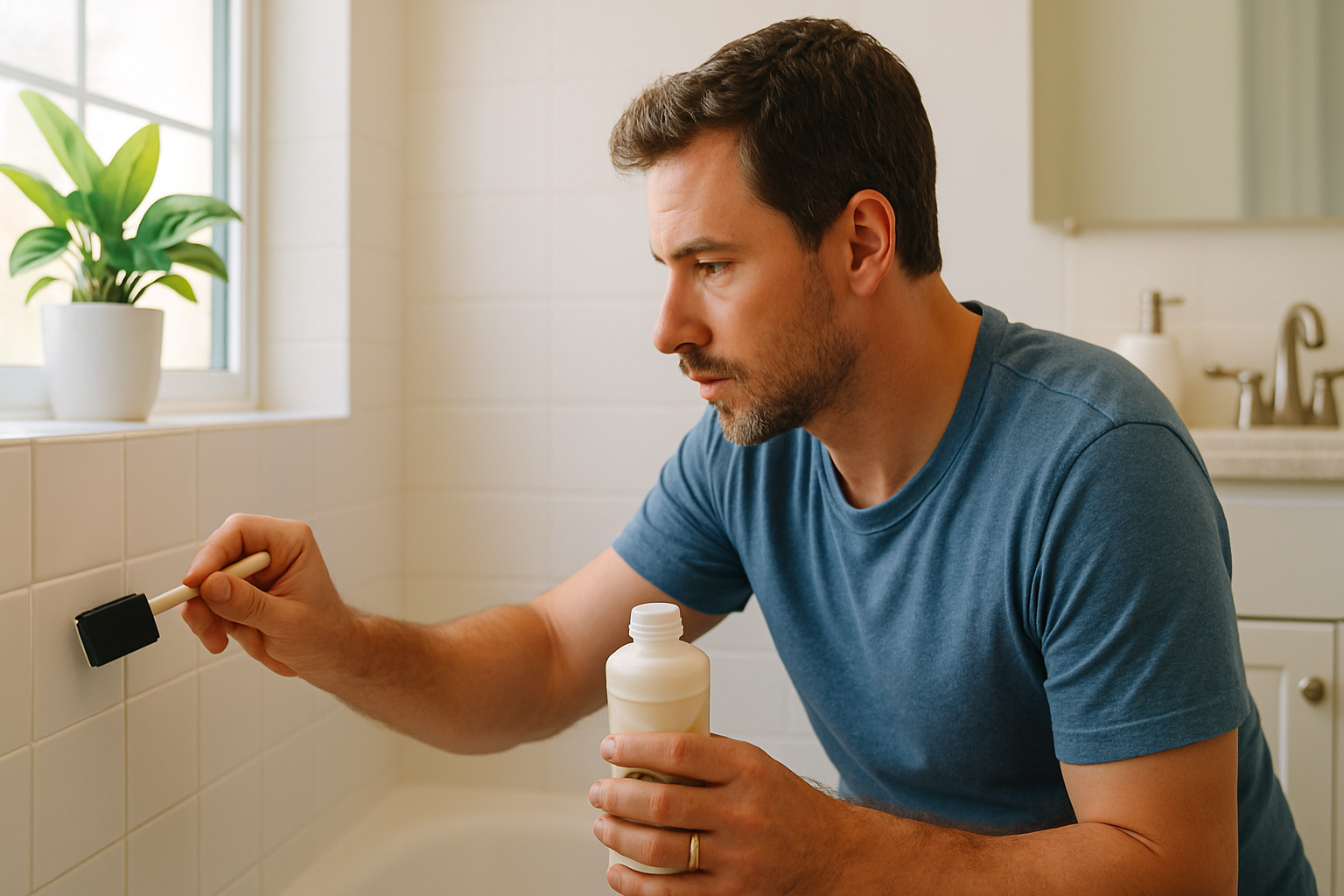
Cleaning grout is only half the battle in Tampa Bay’s climate. Sealing it is what prevents you from repeating this process every single month. Grout sealer fills the microscopic pores in the grout surface, creating a barrier that repels moisture, mildew spores, soap scum, and mineral deposits.
Choosing a Sealer
Penetrating (impregnating) sealers are the gold standard for Florida bathrooms. They soak into the grout rather than forming a surface film, which means they don’t peel or discolor under high-humidity conditions. Look for a sealer rated for wet areas and reapply as directed — typically every 12–18 months in a Tampa Bay climate, versus every 2–3 years in drier regions.
Maintenance Schedule for Florida Homes
- Weekly: Wipe down tile walls with a squeegee or microfiber cloth after each shower to minimize moisture buildup.
- Monthly: Spray grout lines with a diluted hydrogen peroxide solution (1 part peroxide to 2 parts water) and let it sit for 5 minutes before rinsing. This keeps surface mildew from taking hold.
- Every 3 months: Do a full scrub using one of the cleaning methods described above.
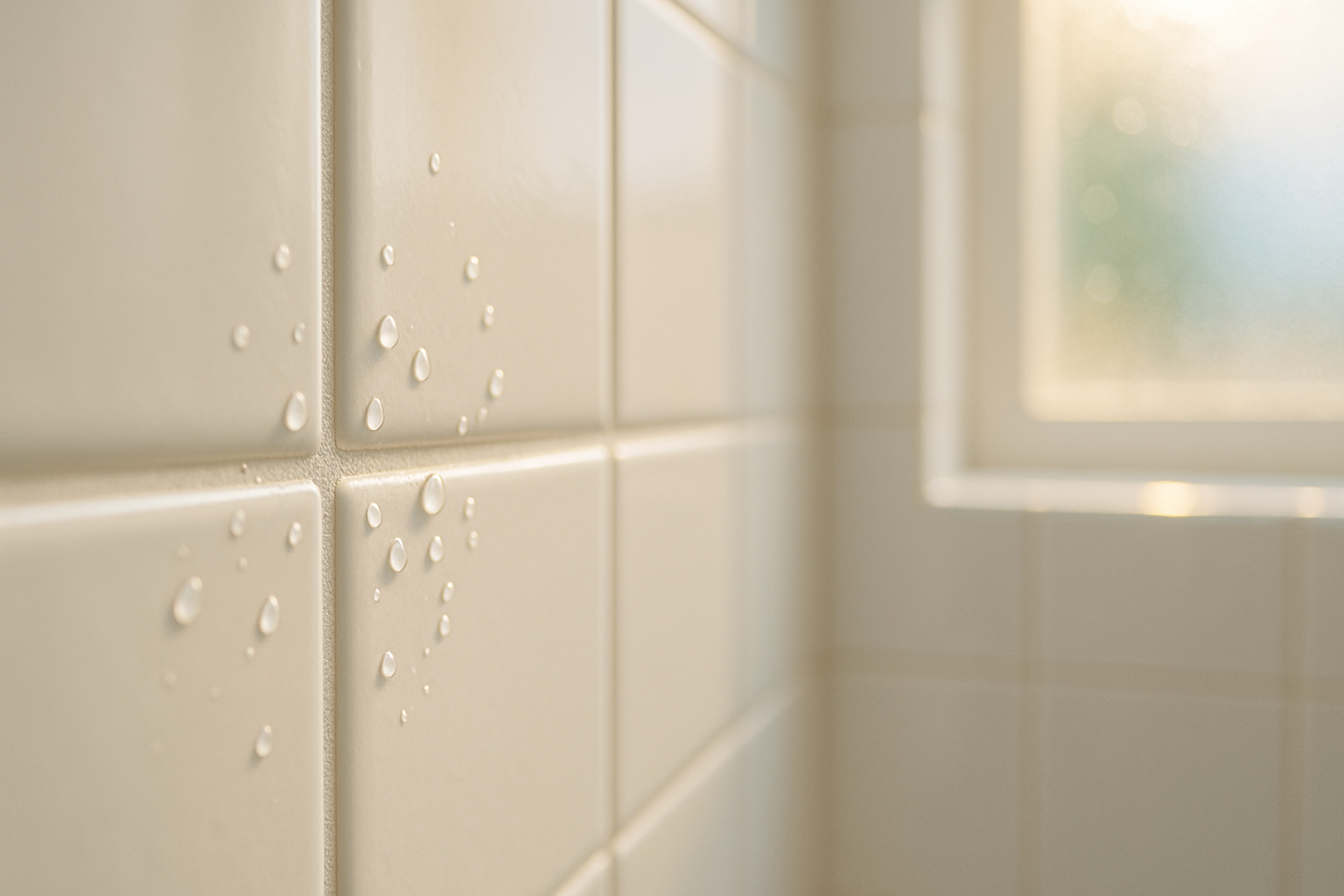
- Annually: Check your sealer by dripping water on the grout. If it soaks in rather than beading, it’s time to reseal.
Staying on a regular cleaning schedule is much easier — and more affordable — than dealing with deeply stained grout that requires professional restoration. Our regular cleaning plans in Tampa can help you maintain bathroom surfaces between your own deep-cleaning sessions.
When to Call a Professional Cleaning Service
Sometimes DIY methods simply aren’t enough — and that’s okay. There are several signs that your Tampa Bay bathroom grout has crossed the line from a weekend project into professional territory. If the grout is crumbling, cracked, or missing in sections, no amount of scrubbing will fix the underlying issue — that’s a regrouting job. Similarly, if you see black or green staining that returns within days of cleaning, you may be dealing with a mold colony rather than surface mildew, which requires professional-grade remediation.
Professional tile and grout cleaning services in the Tampa area typically use steam cleaning equipment and commercial-grade extraction tools that can lift staining from deep within porous grout without damaging the surrounding tile. Typical Tampa Bay market ranges for professional grout cleaning run between $150 and $400 for a standard bathroom, depending on square footage, tile type, and stain severity — though prices vary widely by provider.
FG7 Cleaning serves homeowners throughout Tampa, St. Petersburg, Clearwater, Brandon, and Riverview with thorough, detail-oriented cleaning that goes beyond the surface. If your bathroom grout is past the point of a DIY fix, we’re here to help restore it.
Frequently Asked Questions
What is the best way to know how to clean grout with mildew stains in Florida?
The most effective approach for Florida’s climate is to use an oxygen bleach paste — mix sodium percarbonate with warm water to form a thick consistency — and let it dwell on the stained grout for 10–15 minutes before scrubbing with a stiff nylon brush. Follow up with a thorough rinse and dry the surface completely to prevent immediate re-growth. Repeat monthly for prevention in high-humidity areas like Tampa Bay bathrooms.
How often should I reseal bathroom grout in Tampa?
In Tampa’s subtropical climate, most grout experts recommend resealing every 12–18 months, compared to every 2–3 years in drier regions. You can test your existing sealer by dripping water on the grout — if it beads up, you’re still protected; if it soaks in, it’s time to reseal. Using a penetrating sealer formulated for wet areas will give you the longest-lasting protection.
Is bleach safe to use on bathroom grout?
Diluted chlorine bleach can be effective for killing surface mildew, but frequent use degrades grout over time and can cause discoloration. Oxygen bleach or hydrogen peroxide are safer alternatives that are gentler on the grout structure while still being highly effective against mildew. If you have natural stone tile, avoid all acid-based cleaners and chlorine bleach entirely.
Can humidity from my lanai affect my bathroom grout?
Yes — Florida’s screen porches and lanais can significantly increase indoor humidity in adjacent rooms, especially during Tampa Bay’s rainy season from June through September. This accelerates mildew growth in bathroom grout, even if the bathroom itself is well-ventilated. Installing a dehumidifier near high-traffic areas and ensuring your bathroom exhaust fan is rated for your room’s square footage can make a measurable difference.
Ready to take the mildew battle off your to-do list? The FG7 Cleaning team is experienced in Florida bathrooms, Florida humidity, and everything in between. Contact us today to schedule your cleaning and let us handle the grout so you don’t have to.