10 Hidden Spots Most Tampa Cleaning Services Miss — And We Don’t for Thorough Cleaning Tampa Homes Deserve
If you’ve ever hired a cleaning service in Tampa Bay and still noticed a grimy ceiling fan or sticky light switch afterward, you’re not alone. Most budget cleaning companies work through a checklist so fast that dozens of overlooked spots accumulate dust, bacteria, and grime between visits. For truly thorough cleaning Tampa homeowners can count on, you need a team trained to go beyond the obvious surfaces. At FG7 Cleaning, we’ve built our reputation on finding — and eliminating — every hidden problem spot in your home.
Florida’s subtropical climate makes this even more critical. Tampa Bay’s relentless humidity lets mold and mildew colonize surfaces that look perfectly clean at first glance. Pollen season coats horizontal surfaces inside and out, and our beloved lanais trap organic debris that standard mops never reach. Knowing where to look is half the battle — and in this post, we’re pulling back the curtain on the ten spots most cleaning crews skip, so you know exactly what separates a mediocre clean from a genuinely spotless home.
1. Ceiling Fans and Light Fixtures: The Dust Launchers
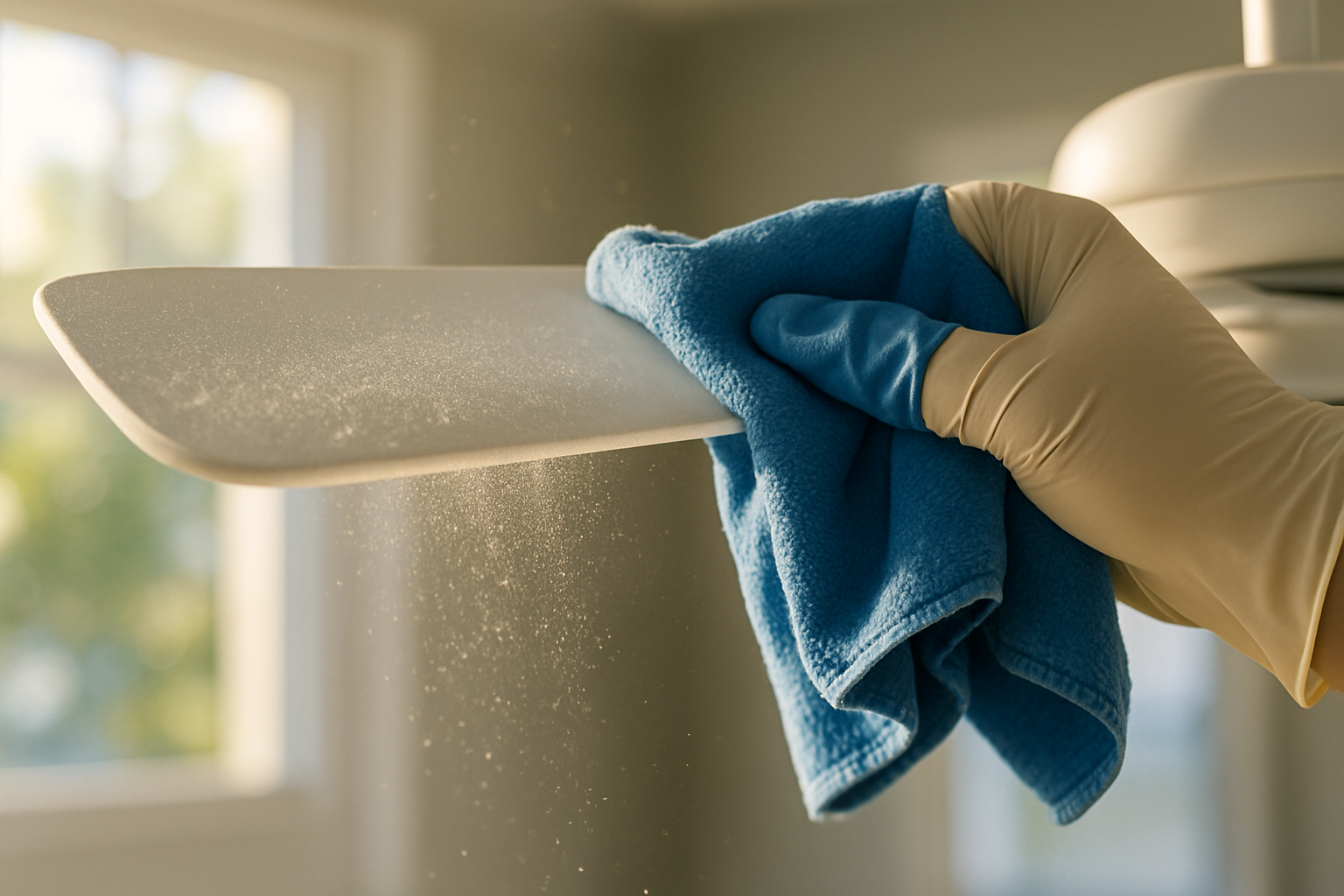
Ceiling fans are arguably the single most neglected surface in any Tampa home. Because dust settles on the top edge of each blade, it’s invisible from below — right up until the moment you flip the fan on and send a cloud of allergens raining down on your living room. In Florida’s high-humidity environment, that dust often bonds with moisture to form a sticky, gray paste that a quick swipe won’t remove.
A professional, thorough cleaning approach means tackling each blade individually with a microfiber sleeve tool, wiping both the top and bottom surfaces, and following up on the motor housing and light globe. Light fixtures get similar treatment: removing glass shades, rinsing them separately, and clearing dead insects — a particularly common Florida problem — from enclosed fixtures. Our St. Petersburg and Tampa crews carry extendable tools to reach cathedral ceilings without ladders, making sure no blade or bulb housing is left behind. Doing this monthly prevents allergen buildup and keeps your HVAC system from working overtime to compensate for recirculated debris.
2. Baseboards and Door Frames: Ground-Level Grime Magnets
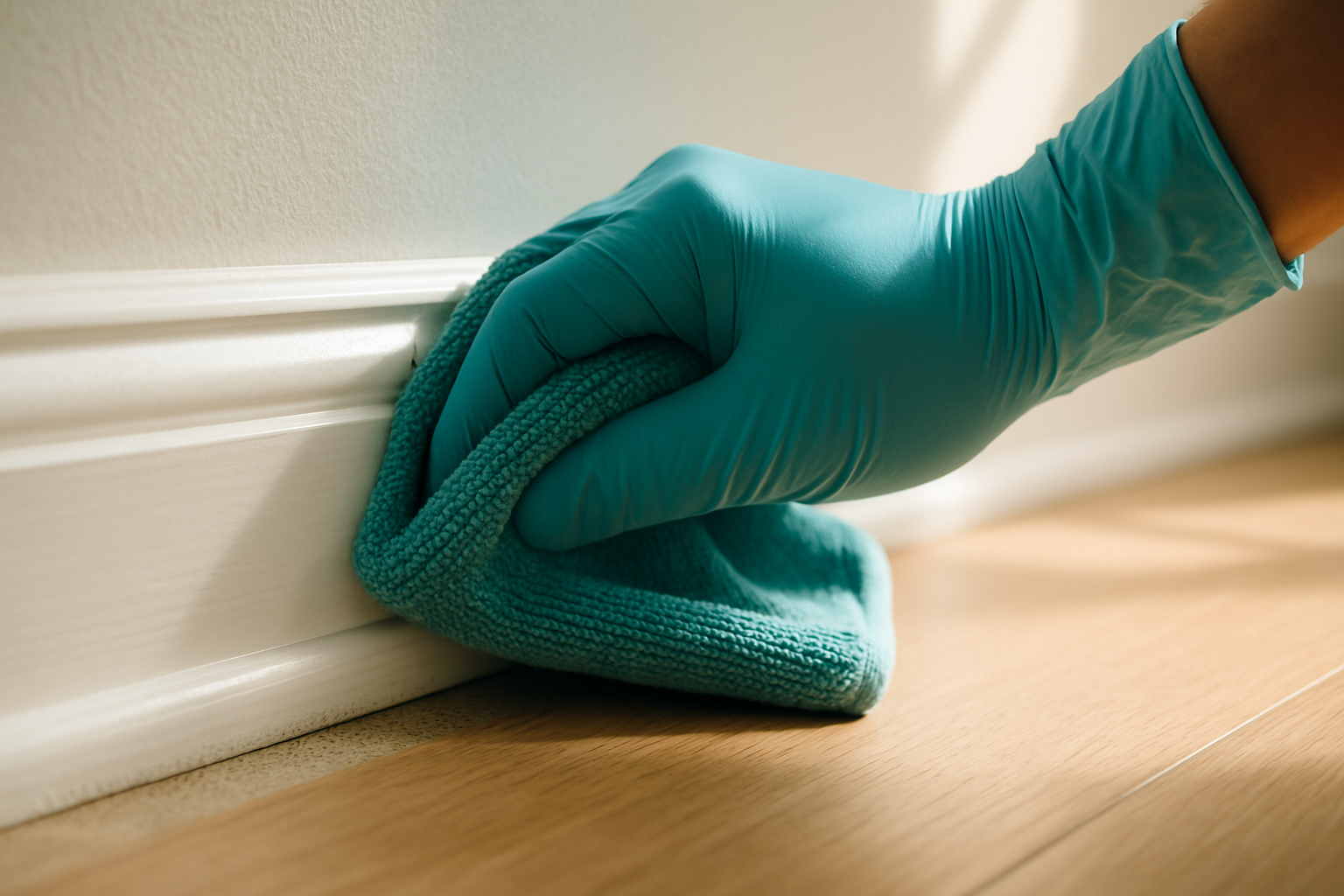
Baseboards sit at the intersection of floor and wall — exactly where vacuum airflow deposits the finest dust particles. In Tampa Bay homes, this zone also catches humidity-driven condensation, which turns ordinary household dust into a grimy, sometimes mold-tinged stripe that standard mopping never touches. Painted baseboards are especially vulnerable: the slightly textured surface grips debris far more tenaciously than a smooth tile floor.
Our process involves hand-wiping every linear foot of baseboard with a damp microfiber cloth, then following up with a dry pass to prevent moisture from sitting on paint. Door frames — both the top ledge and the recessed interior — receive the same treatment. We pay extra attention to high-traffic areas like entryways and hallways, where shoes kick up fine sand (a Tampa Bay staple) that embeds itself in the paint texture. For homes with pets, baseboards near feeding stations and pet beds are treated as priority zones. If you’re curious how this fits into a broader scope of work, explore our deep cleaning Tampa service for a full breakdown of every surface we address on a first-visit or seasonal clean.
3. Tops of Cabinets and Refrigerators: The Forgotten Horizontal Surfaces
Kitchen cabinet tops are a masterclass in “out of sight, out of mind.” Grease vapor from cooking rises and settles on every horizontal surface above eye level, where it mixes with ambient dust to create a sticky, yellowish film. In Tampa’s warm kitchens — where air conditioning cycles on and off all day — this buildup accelerates because humidity keeps the grease tacky rather than drying it to a powder.
The same principle applies to the top of your refrigerator, the ledge above your range hood, and any open shelving near the stove. Most cleaning crews simply don’t carry the step stools or microfiber tools necessary to reach these areas safely and thoroughly. Our Tampa teams are equipped and trained to degrease these surfaces using food-safe cleaners, wipe them completely dry, and note any areas where buildup suggests the range hood filter may need replacement. Refrigerator coils at the back or bottom also collect dust that forces the appliance to work harder — we brush those out as part of a comprehensive kitchen clean. These small acts add up to a dramatically fresher, more hygienic kitchen environment.
4. Behind and Beneath Toilets: The Bathroom’s Blind Spot
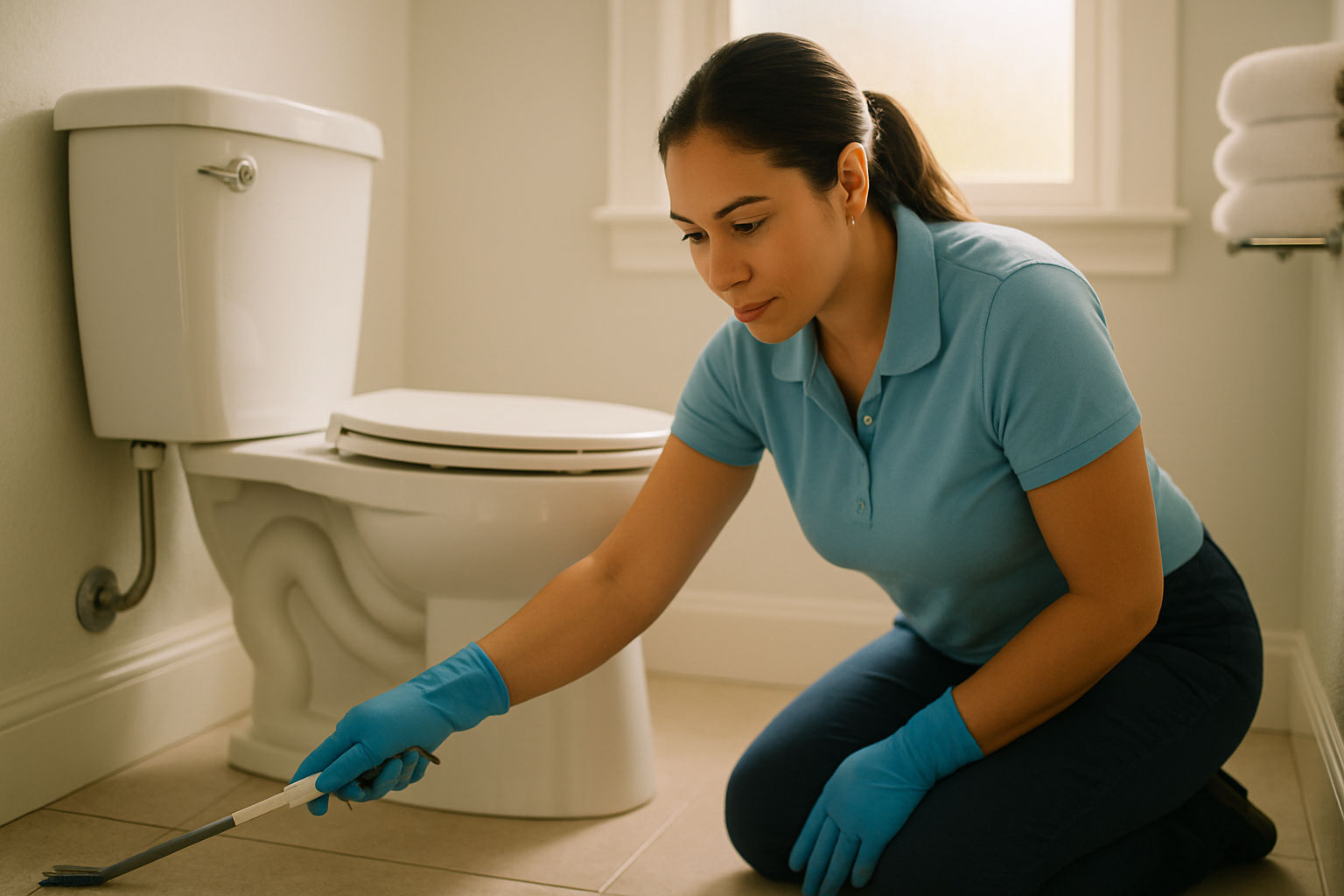
Ask any professional cleaner what area homeowners are most shocked to see addressed properly, and the answer is almost always the zone behind and beneath the toilet. The narrow gap between the porcelain base and the wall — and the floor space underneath the tank — collects a potent mix of dust, hair, and aerosolized bathroom particles that standard mop handles simply can’t reach. In Florida’s humidity, this zone can develop mildew within days of a cleaning if it’s not dried properly.
Our crews use slim, flexible cleaning tools specifically designed for this geometry. We clean the exterior of the tank, the bolts at the base, the supply line, and the wall directly behind the toilet — areas where mineral deposits and grime accumulate invisibly. The floor beneath the toilet tank is hand-scrubbed, not just mopped around. For our regular cleaning Tampa clients, we include this in every visit because consistent maintenance prevents the kind of buildup that requires harsh chemical intervention to remove. Bathrooms in Tampa’s older homes, especially in St. Petersburg and Seminole Heights, often have tighter floor plans that make these areas even harder to reach — and even more important to address.
5. Light Switches, Remotes, and High-Touch Surfaces: The Germ Hotspots
Studies consistently show that light switches, door handles, and remote controls carry more bacteria per square inch than a toilet seat. Yet these surfaces are among the most commonly skipped in a standard cleaning visit — largely because they require individual attention rather than broad strokes with a mop or cloth. In a Tampa household with kids, pets, or frequent guests, these high-touch zones can become re-contamination points that undermine every other surface you’ve just cleaned.
Our checklist explicitly includes every light switch plate, thermostat face, remote control, drawer pull, cabinet knob, and appliance handle in the home. We use hospital-grade disinfecting wipes on hard plastic surfaces and microfiber cloths with an appropriate disinfectant solution on metal fixtures to avoid corrosion. Remote controls are wiped individually, paying attention to the gaps between buttons where crumbs and skin oils accumulate. This level of detail is what sets a genuinely thorough cleaning Tampa team apart from one that simply mops floors and wipes counters. Don’t underestimate how much cleaner your home feels — and actually is — when every hand-contact surface is properly sanitized on every visit.
Frequently Asked Questions
What makes thorough cleaning Tampa homes need different from cleaning in other cities?
Tampa Bay’s subtropical humidity, heavy pollen seasons, and salt air (especially near the coast) accelerate buildup on surfaces that would stay clean longer in drier climates. Mold, mildew, and sticky dust-grease combinations are far more common here, which means a thorough cleaning Tampa service must address moisture-prone zones and horizontal surfaces more frequently than a typical national cleaning checklist would recommend.
How often should hidden spots like ceiling fans and baseboards be cleaned in a Tampa home?
In Tampa and the broader Tampa Bay area, we recommend ceiling fans be wiped down at least monthly, especially during spring pollen season and after any period of high indoor humidity. Baseboards and cabinet tops should be deep-cleaned every four to six weeks, with touch-ups in between. Homes near Tampa Bay waterways may need more frequent attention due to salt-air particle deposits.
Do FG7 Cleaning crews clean lanais and screen porches in the Tampa Bay area?
Yes — lanai and screen-porch cleaning is a specialty for us precisely because Florida’s outdoor living spaces accumulate pollen, mold, dead insects, and organic debris that standard cleaning services ignore. We sweep and scrub the flooring, wipe down furniture and frames, and clean screen panels to remove mildew staining. Ask about our add-on lanai service when you book.
How can I tell if my current cleaning service is actually cleaning the hidden spots?
Run a finger along the top of a ceiling fan blade, a baseboard near the floor, and the back ledge of a toilet tank after your next scheduled cleaning. If you find visible dust or grime, those areas were skipped. A reliable cleaning service will proactively address these zones every visit and welcome you to inspect their work — that’s the standard we hold ourselves to at FG7 Cleaning.
Ready to experience a level of detail that most Tampa Bay cleaning services simply don’t offer? Contact FG7 Cleaning today to schedule your first thorough clean and see exactly what a difference attention to the hidden spots can make in your home.